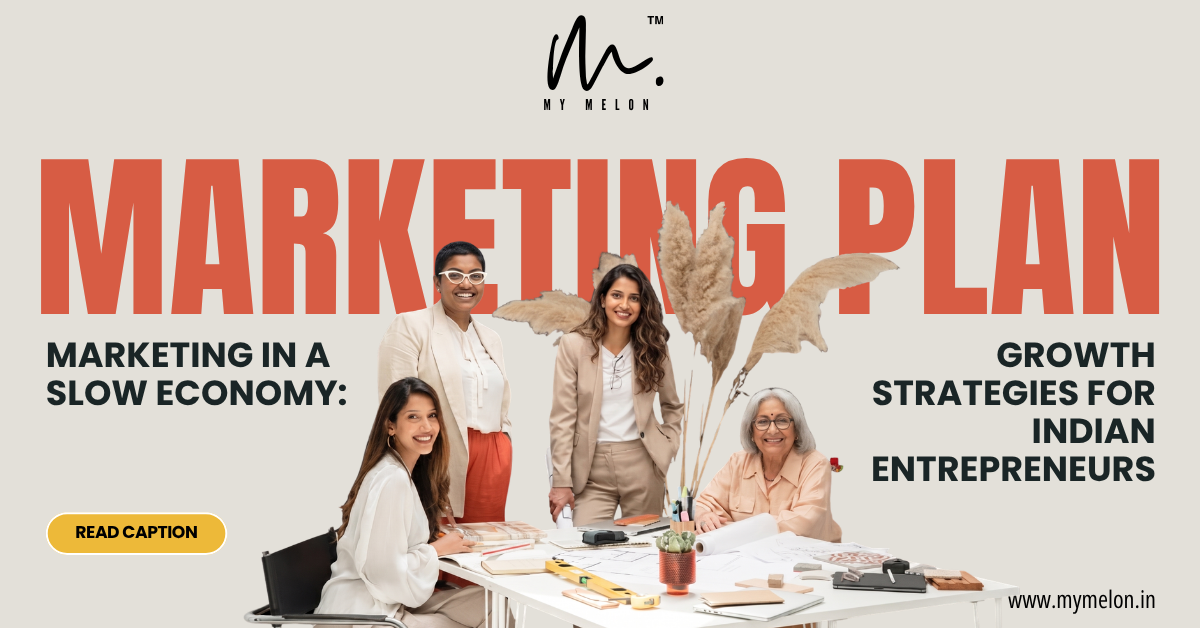
When the economy slows down, most businesses don’t fail because demand disappears.
They fail because their marketing collapses under pressure.
Budgets get cut. Campaigns stop. Teams panic.
And suddenly, growth becomes “optional”.
But here’s the truth:
A slow economy doesn’t kill businesses. Bad decisions do.
In India, where competition is already intense, a slowdown only separates two types of businesses:
- Those who retreat
- Those who reposition and grow
Let’s understand what actually works.
The Reality of a Slow Economy
In a slow market:
- Customers take longer to decide
- Price sensitivity increases
- Trust becomes more important than ever
- Random marketing stops working
This is not the time to “try everything”.
This is the time to get brutally focused.
What Most Businesses Do Wrong
Let’s call it out.
When things slow down, most founders:
- Cut marketing budgets first
- Stop ads completely
- Reduce content efforts
- Switch agencies every 2–3 months
- Start chasing “cheap leads”
This is panic, not strategy.
And panic leads to inconsistent visibility, which kills long-term growth.
What Actually Works in a Slow Economy
1. Double Down on Positioning
If your message is generic, you will suffer the most.
“Best quality”
“Affordable pricing”
“Trusted service”
Nobody cares.
You need clarity:
- Who exactly do you serve?
- What specific problem do you solve?
- Why should someone choose you over others?
Clear positioning reduces price pressure.
2. Build Trust Before Selling
In uncertain times, buyers don’t rush.
They:
- Research more
- Compare more
- Delay decisions
This means your marketing should focus on:
- Educational content
- Case studies
- Real proof
- Clear communication
If your brand doesn’t feel trustworthy, you won’t even be considered.
3. Focus on Demand, Not Just Leads
Most businesses obsess over leads.
But in a slow economy, lead quality matters more than quantity.
Instead of asking:
“How many leads did we get?”
Ask:
“Are we attracting the right audience?”
Demand generation includes:
- Strong brand presence
- Consistent messaging
- Visibility across search and social
4. Optimize What You Already Have
This is where most businesses lose money.
They chase new leads but ignore:
- Website conversion issues
- Weak landing pages
- Poor follow-ups
- Broken sales process
In many cases, growth doesn’t need more traffic.
It needs better conversion.
5. Stay Visible While Others Go Silent
This is the biggest opportunity.
When competitors reduce marketing:
- Ad costs drop
- Attention becomes cheaper
- Visibility gap increases
Brands that stay consistent during slowdowns often dominate when the market recovers.
6. Build Systems, Not Campaigns
Campaigns are temporary.
Systems create consistency.
A strong marketing system includes:
- Clear funnel
- Defined audience
- Consistent content
- Performance tracking
- Continuous optimization
Without a system, every month feels like starting from zero.
The Indian Context: Why This Matters More
In India:
- Markets are crowded
- Price competition is aggressive
- Trust takes time to build
This makes structured marketing even more important.
If you are still dependent on:
- Referrals
- Word of mouth
- Occasional ads
Your growth will always remain unpredictable.
The Real Shift You Need to Make
Stop thinking like this:
“How do I get more leads this month?”
Start thinking like this:
“How do I build a system that brings consistent business?”
That shift alone changes everything.
Final Thought
A slow economy is not a signal to stop marketing.
It is a signal to fix your marketing.
Because when the market slows down, only one thing matters:
Clarity over noise.
System over chaos.
Trust over tactics.
If your marketing currently feels scattered, inconsistent, or overly dependent on short-term tactics, it’s not a budget problem. It’s a structure problem.
At MyMelon, we help businesses build structured digital systems that drive consistent visibility, better-quality leads, and long-term growth.
If you want to understand where your current marketing stands and what needs to be fixed, it’s time to take a step back and look at the bigger picture.
Start with a strategy conversation.