/home/u523506497/domains/mymelon.in/public_html/wp-includes UP
<?php
/**
 * Core User Role & Capabilities API
 *
 * @package WordPress
 * @subpackage Users
 */

/**
 * Maps a capability to the primitive capabilities required of the given user to
 * satisfy the capability being checked.
 *
 * This function also accepts an ID of an object to map against if the capability is a meta capability. Meta
 * capabilities such as `edit_post` and `edit_user` are capabilities used by this function to map to primitive
 * capabilities that a user or role requires, such as `edit_posts` and `edit_others_posts`.
 *
 * Example usage:
 *
 *     map_meta_cap( 'edit_posts', $user->ID );
 *     map_meta_cap( 'edit_post', $user->ID, $post->ID );
 *     map_meta_cap( 'edit_post_meta', $user->ID, $post->ID, $meta_key );
 *
 * This function does not check whether the user has the required capabilities,
 * it just returns what the required capabilities are.
 *
 * @since 2.0.0
 * @since 4.9.6 Added the `export_others_personal_data`, `erase_others_personal_data`,
 *              and `manage_privacy_options` capabilities.
 * @since 5.1.0 Added the `update_php` capability.
 * @since 5.2.0 Added the `resume_plugin` and `resume_theme` capabilities.
 * @since 5.3.0 Formalized the existing and already documented `...$args` parameter
 *              by adding it to the function signature.
 * @since 5.7.0 Added the `create_app_password`, `list_app_passwords`, `read_app_password`,
 *              `edit_app_password`, `delete_app_passwords`, `delete_app_password`,
 *              and `update_https` capabilities.
 * @since 6.7.0 Added the `edit_block_binding` capability.
 *
 * @global array $post_type_meta_caps Used to get post type meta capabilities.
 *
 * @param string $cap     Capability being checked.
 * @param int    $user_id User ID.
 * @param mixed  ...$args Optional further parameters, typically starting with an object ID.
 * @return string[] Primitive capabilities required of the user.
 */
function map_meta_cap( $cap, $user_id, ...$args ) {
	$caps = array();

	switch ( $cap ) {
		case 'remove_user':
			// In multisite the user must be a super admin to remove themselves.
			if ( isset( $args[0] ) && $user_id === (int) $args[0] && ! is_super_admin( $user_id ) ) {
				$caps[] = 'do_not_allow';
			} else {
				$caps[] = 'remove_users';
			}
			break;
		case 'promote_user':
		case 'add_users':
			$caps[] = 'promote_users';
			break;
		case 'edit_user':
		case 'edit_users':
			// Non-existent users can't edit users, not even themselves.
			if ( $user_id < 1 ) {
				$caps[] = 'do_not_allow';
				break;
			}

			// Allow user to edit themselves.
			if ( 'edit_user' === $cap && isset( $args[0] ) && $user_id === (int) $args[0] ) {
				break;
			}

			// In multisite the user must have manage_network_users caps. If editing a super admin, the user must be a super admin.
			if ( is_multisite() && ( ( ! is_super_admin( $user_id ) && 'edit_user' === $cap && is_super_admin( $args[0] ) ) || ! user_can( $user_id, 'manage_network_users' ) ) ) {
				$caps[] = 'do_not_allow';
			} else {
				$caps[] = 'edit_users'; // edit_user maps to edit_users.
			}
			break;
		case 'delete_post':
		case 'delete_page':
			if ( ! isset( $args[0] ) ) {
				if ( 'delete_post' === $cap ) {
					/* translators: %s: Capability name. */
					$message = __( 'When checking for the %s capability, you must always check it against a specific post.' );
				} else {
					/* translators: %s: Capability name. */
					$message = __( 'When checking for the %s capability, you must always check it against a specific page.' );
				}

				_doing_it_wrong(
					__FUNCTION__,
					sprintf( $message, '<code>' . $cap . '</code>' ),
					'6.1.0'
				);

				$caps[] = 'do_not_allow';
				break;
			}

			$post = get_post( $args[0] );
			if ( ! $post ) {
				$caps[] = 'do_not_allow';
				break;
			}

			if ( 'revision' === $post->post_type ) {
				$caps[] = 'do_not_allow';
				break;
			}

			if ( (int) get_option( 'page_for_posts' ) === $post->ID
				|| (int) get_option( 'page_on_front' ) === $post->ID
			) {
				$caps[] = 'manage_options';
				break;
			}

			$post_type = get_post_type_object( $post->post_type );
			if ( ! $post_type ) {
				/* translators: 1: Post type, 2: Capability name. */
				$message = __( 'The post type %1$s is not registered, so it may not be reliable to check the capability %2$s against a post of that type.' );

				_doing_it_wrong(
					__FUNCTION__,
					sprintf(
						$message,
						'<code>' . $post->post_type . '</code>',
						'<code>' . $cap . '</code>'
					),
					'4.4.0'
				);

				$caps[] = 'edit_others_posts';
				break;
			}

			if ( ! $post_type->map_meta_cap ) {
				$caps[] = $post_type->cap->$cap;
				// Prior to 3.1 we would re-call map_meta_cap here.
				if ( 'delete_post' === $cap ) {
					$cap = $post_type->cap->$cap;
				}
				break;
			}

			// If the post author is set and the user is the author...
			if ( $post->post_author && $user_id === (int) $post->post_author ) {
				// If the post is published or scheduled...
				if ( in_array( $post->post_status, array( 'publish', 'future' ), true ) ) {
					$caps[] = $post_type->cap->delete_published_posts;
				} elseif ( 'trash' === $post->post_status ) {
					$status = get_post_meta( $post->ID, '_wp_trash_meta_status', true );
					if ( in_array( $status, array( 'publish', 'future' ), true ) ) {
						$caps[] = $post_type->cap->delete_published_posts;
					} else {
						$caps[] = $post_type->cap->delete_posts;
					}
				} else {
					// If the post is draft...
					$caps[] = $post_type->cap->delete_posts;
				}
			} else {
				// The user is trying to edit someone else's post.
				$caps[] = $post_type->cap->delete_others_posts;
				// The post is published or scheduled, extra cap required.
				if ( in_array( $post->post_status, array( 'publish', 'future' ), true ) ) {
					$caps[] = $post_type->cap->delete_published_posts;
				} elseif ( 'private' === $post->post_status ) {
					$caps[] = $post_type->cap->delete_private_posts;
				}
			}

			/*
			 * Setting the privacy policy page requires `manage_privacy_options`,
			 * so deleting it should require that too.
			 */
			if ( (int) get_option( 'wp_page_for_privacy_policy' ) === $post->ID ) {
				$caps = array_merge( $caps, map_meta_cap( 'manage_privacy_options', $user_id ) );
			}

			break;
		/*
		 * edit_post breaks down to edit_posts, edit_published_posts, or
		 * edit_others_posts.
		 */
		case 'edit_post':
		case 'edit_page':
			if ( ! isset( $args[0] ) ) {
				if ( 'edit_post' === $cap ) {
					/* translators: %s: Capability name. */
					$message = __( 'When checking for the %s capability, you must always check it against a specific post.' );
				} else {
					/* translators: %s: Capability name. */
					$message = __( 'When checking for the %s capability, you must always check it against a specific page.' );
				}

				_doing_it_wrong(
					__FUNCTION__,
					sprintf( $message, '<code>' . $cap . '</code>' ),
					'6.1.0'
				);

				$caps[] = 'do_not_allow';
				break;
			}

			$post = get_post( $args[0] );
			if ( ! $post ) {
				$caps[] = 'do_not_allow';
				break;
			}

			if ( 'revision' === $post->post_type ) {
				$post = get_post( $post->post_parent );
				if ( ! $post ) {
					$caps[] = 'do_not_allow';
					break;
				}
			}

			$post_type = get_post_type_object( $post->post_type );
			if ( ! $post_type ) {
				/* translators: 1: Post type, 2: Capability name. */
				$message = __( 'The post type %1$s is not registered, so it may not be reliable to check the capability %2$s against a post of that type.' );

				_doing_it_wrong(
					__FUNCTION__,
					sprintf(
						$message,
						'<code>' . $post->post_type . '</code>',
						'<code>' . $cap . '</code>'
					),
					'4.4.0'
				);

				$caps[] = 'edit_others_posts';
				break;
			}

			if ( ! $post_type->map_meta_cap ) {
				$caps[] = $post_type->cap->$cap;
				// Prior to 3.1 we would re-call map_meta_cap here.
				if ( 'edit_post' === $cap ) {
					$cap = $post_type->cap->$cap;
				}
				break;
			}

			// If the post author is set and the user is the author...
			if ( $post->post_author && $user_id === (int) $post->post_author ) {
				// If the post is published or scheduled...
				if ( in_array( $post->post_status, array( 'publish', 'future' ), true ) ) {
					$caps[] = $post_type->cap->edit_published_posts;
				} elseif ( 'trash' === $post->post_status ) {
					$status = get_post_meta( $post->ID, '_wp_trash_meta_status', true );
					if ( in_array( $status, array( 'publish', 'future' ), true ) ) {
						$caps[] = $post_type->cap->edit_published_posts;
					} else {
						$caps[] = $post_type->cap->edit_posts;
					}
				} else {
					// If the post is draft...
					$caps[] = $post_type->cap->edit_posts;
				}
			} else {
				// The user is trying to edit someone else's post.
				$caps[] = $post_type->cap->edit_others_posts;
				// The post is published or scheduled, extra cap required.
				if ( in_array( $post->post_status, array( 'publish', 'future' ), true ) ) {
					$caps[] = $post_type->cap->edit_published_posts;
				} elseif ( 'private' === $post->post_status ) {
					$caps[] = $post_type->cap->edit_private_posts;
				}
			}

			/*
			 * Setting the privacy policy page requires `manage_privacy_options`,
			 * so editing it should require that too.
			 */
			if ( (int) get_option( 'wp_page_for_privacy_policy' ) === $post->ID ) {
				$caps = array_merge( $caps, map_meta_cap( 'manage_privacy_options', $user_id ) );
			}

			break;
		case 'read_post':
		case 'read_page':
			if ( ! isset( $args[0] ) ) {
				if ( 'read_post' === $cap ) {
					/* translators: %s: Capability name. */
					$message = __( 'When checking for the %s capability, you must always check it against a specific post.' );
				} else {
					/* translators: %s: Capability name. */
					$message = __( 'When checking for the %s capability, you must always check it against a specific page.' );
				}

				_doing_it_wrong(
					__FUNCTION__,
					sprintf( $message, '<code>' . $cap . '</code>' ),
					'6.1.0'
				);

				$caps[] = 'do_not_allow';
				break;
			}

			$post = get_post( $args[0] );
			if ( ! $post ) {
				$caps[] = 'do_not_allow';
				break;
			}

			if ( 'revision' === $post->post_type ) {
				$post = get_post( $post->post_parent );
				if ( ! $post ) {
					$caps[] = 'do_not_allow';
					break;
				}
			}

			$post_type = get_post_type_object( $post->post_type );
			if ( ! $post_type ) {
				/* translators: 1: Post type, 2: Capability name. */
				$message = __( 'The post type %1$s is not registered, so it may not be reliable to check the capability %2$s against a post of that type.' );

				_doing_it_wrong(
					__FUNCTION__,
					sprintf(
						$message,
						'<code>' . $post->post_type . '</code>',
						'<code>' . $cap . '</code>'
					),
					'4.4.0'
				);

				$caps[] = 'edit_others_posts';
				break;
			}

			if ( ! $post_type->map_meta_cap ) {
				$caps[] = $post_type->cap->$cap;
				// Prior to 3.1 we would re-call map_meta_cap here.
				if ( 'read_post' === $cap ) {
					$cap = $post_type->cap->$cap;
				}
				break;
			}

			$status_obj = get_post_status_object( get_post_status( $post ) );
			if ( ! $status_obj ) {
				/* translators: 1: Post status, 2: Capability name. */
				$message = __( 'The post status %1$s is not registered, so it may not be reliable to check the capability %2$s against a post with that status.' );

				_doing_it_wrong(
					__FUNCTION__,
					sprintf(
						$message,
						'<code>' . get_post_status( $post ) . '</code>',
						'<code>' . $cap . '</code>'
					),
					'5.4.0'
				);

				$caps[] = 'edit_others_posts';
				break;
			}

			if ( $status_obj->public ) {
				$caps[] = $post_type->cap->read;
				break;
			}

			if ( $post->post_author && $user_id === (int) $post->post_author ) {
				$caps[] = $post_type->cap->read;
			} elseif ( $status_obj->private ) {
				$caps[] = $post_type->cap->read_private_posts;
			} else {
				$caps = map_meta_cap( 'edit_post', $user_id, $post->ID );
			}
			break;
		case 'publish_post':
			if ( ! isset( $args[0] ) ) {
				/* translators: %s: Capability name. */
				$message = __( 'When checking for the %s capability, you must always check it against a specific post.' );

				_doing_it_wrong(
					__FUNCTION__,
					sprintf( $message, '<code>' . $cap . '</code>' ),
					'6.1.0'
				);

				$caps[] = 'do_not_allow';
				break;
			}

			$post = get_post( $args[0] );
			if ( ! $post ) {
				$caps[] = 'do_not_allow';
				break;
			}

			$post_type = get_post_type_object( $post->post_type );
			if ( ! $post_type ) {
				/* translators: 1: Post type, 2: Capability name. */
				$message = __( 'The post type %1$s is not registered, so it may not be reliable to check the capability %2$s against a post of that type.' );

				_doing_it_wrong(
					__FUNCTION__,
					sprintf(
						$message,
						'<code>' . $post->post_type . '</code>',
						'<code>' . $cap . '</code>'
					),
					'4.4.0'
				);

				$caps[] = 'edit_others_posts';
				break;
			}

			$caps[] = $post_type->cap->publish_posts;
			break;
		case 'edit_post_meta':
		case 'delete_post_meta':
		case 'add_post_meta':
		case 'edit_comment_meta':
		case 'delete_comment_meta':
		case 'add_comment_meta':
		case 'edit_term_meta':
		case 'delete_term_meta':
		case 'add_term_meta':
		case 'edit_user_meta':
		case 'delete_user_meta':
		case 'add_user_meta':
			$object_type = explode( '_', $cap )[1];

			if ( ! isset( $args[0] ) ) {
				if ( 'post' === $object_type ) {
					/* translators: %s: Capability name. */
					$message = __( 'When checking for the %s capability, you must always check it against a specific post.' );
				} elseif ( 'comment' === $object_type ) {
					/* translators: %s: Capability name. */
					$message = __( 'When checking for the %s capability, you must always check it against a specific comment.' );
				} elseif ( 'term' === $object_type ) {
					/* translators: %s: Capability name. */
					$message = __( 'When checking for the %s capability, you must always check it against a specific term.' );
				} else {
					/* translators: %s: Capability name. */
					$message = __( 'When checking for the %s capability, you must always check it against a specific user.' );
				}

				_doing_it_wrong(
					__FUNCTION__,
					sprintf( $message, '<code>' . $cap . '</code>' ),
					'6.1.0'
				);

				$caps[] = 'do_not_allow';
				break;
			}

			$object_id = (int) $args[0];

			$object_subtype = get_object_subtype( $object_type, $object_id );

			if ( empty( $object_subtype ) ) {
				$caps[] = 'do_not_allow';
				break;
			}

			$caps = map_meta_cap( "edit_{$object_type}", $user_id, $object_id );

			$meta_key = $args[1] ?? false;

			if ( $meta_key ) {
				$allowed = ! is_protected_meta( $meta_key, $object_type );

				if ( has_filter( "auth_{$object_type}_meta_{$meta_key}_for_{$object_subtype}" ) ) {

					/**
					 * Filters whether the user is allowed to edit a specific meta key of a specific object type and subtype.
					 *
					 * The dynamic portions of the hook name, `$object_type`, `$meta_key`,
					 * and `$object_subtype`, refer to the metadata object type (comment, post, term or user),
					 * the meta key value, and the object subtype respectively.
					 *
					 * @since 4.9.8
					 *
					 * @param bool     $allowed   Whether the user can add the object meta. Default false.
					 * @param string   $meta_key  The meta key.
					 * @param int      $object_id Object ID.
					 * @param int      $user_id   User ID.
					 * @param string   $cap       Capability name.
					 * @param string[] $caps      Array of the user's capabilities.
					 */
					$allowed = apply_filters( "auth_{$object_type}_meta_{$meta_key}_for_{$object_subtype}", $allowed, $meta_key, $object_id, $user_id, $cap, $caps );
				} else {

					/**
					 * Filters whether the user is allowed to edit a specific meta key of a specific object type.
					 *
					 * Return true to have the mapped meta caps from `edit_{$object_type}` apply.
					 *
					 * The dynamic portion of the hook name, `$object_type` refers to the object type being filtered.
					 * The dynamic portion of the hook name, `$meta_key`, refers to the meta key passed to map_meta_cap().
					 *
					 * @since 3.3.0 As `auth_post_meta_{$meta_key}`.
					 * @since 4.6.0
					 *
					 * @param bool     $allowed   Whether the user can add the object meta. Default false.
					 * @param string   $meta_key  The meta key.
					 * @param int      $object_id Object ID.
					 * @param int      $user_id   User ID.
					 * @param string   $cap       Capability name.
					 * @param string[] $caps      Array of the user's capabilities.
					 */
					$allowed = apply_filters( "auth_{$object_type}_meta_{$meta_key}", $allowed, $meta_key, $object_id, $user_id, $cap, $caps );
				}

				/**
				 * Filters whether the user is allowed to edit meta for specific object types/subtypes.
				 *
				 * Return true to have the mapped meta caps from `edit_{$object_type}` apply.
				 *
				 * The dynamic portion of the hook name, `$object_type` refers to the object type being filtered.
				 * The dynamic portion of the hook name, `$object_subtype` refers to the object subtype being filtered.
				 * The dynamic portion of the hook name, `$meta_key`, refers to the meta key passed to map_meta_cap().
				 *
				 * @since 4.6.0 As `auth_post_{$post_type}_meta_{$meta_key}`.
				 * @since 4.7.0 Renamed from `auth_post_{$post_type}_meta_{$meta_key}` to
				 *              `auth_{$object_type}_{$object_subtype}_meta_{$meta_key}`.
				 * @deprecated 4.9.8 Use {@see 'auth_{$object_type}_meta_{$meta_key}_for_{$object_subtype}'} instead.
				 *
				 * @param bool     $allowed   Whether the user can add the object meta. Default false.
				 * @param string   $meta_key  The meta key.
				 * @param int      $object_id Object ID.
				 * @param int      $user_id   User ID.
				 * @param string   $cap       Capability name.
				 * @param string[] $caps      Array of the user's capabilities.
				 */
				$allowed = apply_filters_deprecated(
					"auth_{$object_type}_{$object_subtype}_meta_{$meta_key}",
					array( $allowed, $meta_key, $object_id, $user_id, $cap, $caps ),
					'4.9.8',
					"auth_{$object_type}_meta_{$meta_key}_for_{$object_subtype}"
				);

				if ( ! $allowed ) {
					$caps[] = $cap;
				}
			}
			break;
		case 'edit_comment':
			if ( ! isset( $args[0] ) ) {
				/* translators: %s: Capability name. */
				$message = __( 'When checking for the %s capability, you must always check it against a specific comment.' );

				_doing_it_wrong(
					__FUNCTION__,
					sprintf( $message, '<code>' . $cap . '</code>' ),
					'6.1.0'
				);

				$caps[] = 'do_not_allow';
				break;
			}

			$comment = get_comment( $args[0] );
			if ( ! $comment ) {
				$caps[] = 'do_not_allow';
				break;
			}

			$post = get_post( $comment->comment_post_ID );

			/*
			 * If the post doesn't exist, we have an orphaned comment.
			 * Fall back to the edit_posts capability, instead.
			 */
			if ( $post ) {
				$caps = map_meta_cap( 'edit_post', $user_id, $post->ID );
			} else {
				$caps = map_meta_cap( 'edit_posts', $user_id );
			}
			break;
		case 'unfiltered_upload':
			if ( defined( 'ALLOW_UNFILTERED_UPLOADS' ) && ALLOW_UNFILTERED_UPLOADS && ( ! is_multisite() || is_super_admin( $user_id ) ) ) {
				$caps[] = $cap;
			} else {
				$caps[] = 'do_not_allow';
			}
			break;
		case 'edit_css':
		case 'unfiltered_html':
			// Disallow unfiltered_html for all users, even admins and super admins.
			if ( defined( 'DISALLOW_UNFILTERED_HTML' ) && DISALLOW_UNFILTERED_HTML ) {
				$caps[] = 'do_not_allow';
			} elseif ( is_multisite() && ! is_super_admin( $user_id ) ) {
				$caps[] = 'do_not_allow';
			} else {
				$caps[] = 'unfiltered_html';
			}
			break;
		case 'edit_files':
		case 'edit_plugins':
		case 'edit_themes':
			// Disallow the file editors.
			if ( defined( 'DISALLOW_FILE_EDIT' ) && DISALLOW_FILE_EDIT ) {
				$caps[] = 'do_not_allow';
			} elseif ( ! wp_is_file_mod_allowed( 'capability_edit_themes' ) ) {
				$caps[] = 'do_not_allow';
			} elseif ( is_multisite() && ! is_super_admin( $user_id ) ) {
				$caps[] = 'do_not_allow';
			} else {
				$caps[] = $cap;
			}
			break;
		case 'update_plugins':
		case 'delete_plugins':
		case 'install_plugins':
		case 'upload_plugins':
		case 'update_themes':
		case 'delete_themes':
		case 'install_themes':
		case 'upload_themes':
		case 'update_core':
			/*
			 * Disallow anything that creates, deletes, or updates core, plugin, or theme files.
			 * Files in uploads are excepted.
			 */
			if ( ! wp_is_file_mod_allowed( 'capability_update_core' ) ) {
				$caps[] = 'do_not_allow';
			} elseif ( is_multisite() && ! is_super_admin( $user_id ) ) {
				$caps[] = 'do_not_allow';
			} elseif ( 'upload_themes' === $cap ) {
				$caps[] = 'install_themes';
			} elseif ( 'upload_plugins' === $cap ) {
				$caps[] = 'install_plugins';
			} else {
				$caps[] = $cap;
			}
			break;
		case 'install_languages':
		case 'update_languages':
			if ( ! wp_is_file_mod_allowed( 'can_install_language_pack' ) ) {
				$caps[] = 'do_not_allow';
			} elseif ( is_multisite() && ! is_super_admin( $user_id ) ) {
				$caps[] = 'do_not_allow';
			} else {
				$caps[] = 'install_languages';
			}
			break;
		case 'activate_plugins':
		case 'deactivate_plugins':
		case 'activate_plugin':
		case 'deactivate_plugin':
			$caps[] = 'activate_plugins';
			if ( is_multisite() ) {
				// update_, install_, and delete_ are handled above with is_super_admin().
				$menu_perms = get_site_option( 'menu_items', array() );
				if ( empty( $menu_perms['plugins'] ) ) {
					$caps[] = 'manage_network_plugins';
				}
			}
			break;
		case 'resume_plugin':
			$caps[] = 'resume_plugins';
			break;
		case 'resume_theme':
			$caps[] = 'resume_themes';
			break;
		case 'delete_user':
		case 'delete_users':
			// If multisite only super admins can delete users.
			if ( is_multisite() && ! is_super_admin( $user_id ) ) {
				$caps[] = 'do_not_allow';
			} else {
				$caps[] = 'delete_users'; // delete_user maps to delete_users.
			}
			break;
		case 'create_users':
			if ( ! is_multisite() ) {
				$caps[] = $cap;
			} elseif ( is_super_admin( $user_id ) || get_site_option( 'add_new_users' ) ) {
				$caps[] = $cap;
			} else {
				$caps[] = 'do_not_allow';
			}
			break;
		case 'manage_links':
			if ( get_option( 'link_manager_enabled' ) ) {
				$caps[] = $cap;
			} else {
				$caps[] = 'do_not_allow';
			}
			break;
		case 'customize':
			$caps[] = 'edit_theme_options';
			break;
		case 'delete_site':
			if ( is_multisite() ) {
				$caps[] = 'manage_options';
			} else {
				$caps[] = 'do_not_allow';
			}
			break;
		case 'edit_term':
		case 'delete_term':
		case 'assign_term':
			if ( ! isset( $args[0] ) ) {
				/* translators: %s: Capability name. */
				$message = __( 'When checking for the %s capability, you must always check it against a specific term.' );

				_doing_it_wrong(
					__FUNCTION__,
					sprintf( $message, '<code>' . $cap . '</code>' ),
					'6.1.0'
				);

				$caps[] = 'do_not_allow';
				break;
			}

			$term_id = (int) $args[0];
			$term    = get_term( $term_id );
			if ( ! $term || is_wp_error( $term ) ) {
				$caps[] = 'do_not_allow';
				break;
			}

			$tax = get_taxonomy( $term->taxonomy );
			if ( ! $tax ) {
				$caps[] = 'do_not_allow';
				break;
			}

			if ( 'delete_term' === $cap
				&& ( (int) get_option( 'default_' . $term->taxonomy ) === $term->term_id
					|| (int) get_option( 'default_term_' . $term->taxonomy ) === $term->term_id )
			) {
				$caps[] = 'do_not_allow';
				break;
			}

			$taxo_cap = $cap . 's';

			$caps = map_meta_cap( $tax->cap->$taxo_cap, $user_id, $term_id );

			break;
		case 'manage_post_tags':
		case 'edit_categories':
		case 'edit_post_tags':
		case 'delete_categories':
		case 'delete_post_tags':
			$caps[] = 'manage_categories';
			break;
		case 'assign_categories':
		case 'assign_post_tags':
			$caps[] = 'edit_posts';
			break;
		case 'create_sites':
		case 'delete_sites':
		case 'manage_network':
		case 'manage_sites':
		case 'manage_network_users':
		case 'manage_network_plugins':
		case 'manage_network_themes':
		case 'manage_network_options':
		case 'upgrade_network':
			$caps[] = $cap;
			break;
		case 'setup_network':
			if ( is_multisite() ) {
				$caps[] = 'manage_network_options';
			} else {
				$caps[] = 'manage_options';
			}
			break;
		case 'update_php':
			if ( is_multisite() && ! is_super_admin( $user_id ) ) {
				$caps[] = 'do_not_allow';
			} else {
				$caps[] = 'update_core';
			}
			break;
		case 'update_https':
			if ( is_multisite() && ! is_super_admin( $user_id ) ) {
				$caps[] = 'do_not_allow';
			} else {
				$caps[] = 'manage_options';
				$caps[] = 'update_core';
			}
			break;
		case 'export_others_personal_data':
		case 'erase_others_personal_data':
		case 'manage_privacy_options':
			$caps[] = is_multisite() ? 'manage_network' : 'manage_options';
			break;
		case 'create_app_password':
		case 'list_app_passwords':
		case 'read_app_password':
		case 'edit_app_password':
		case 'delete_app_passwords':
		case 'delete_app_password':
			$caps = map_meta_cap( 'edit_user', $user_id, $args[0] );
			break;
		case 'edit_block_binding':
			$block_editor_context = $args[0];
			if ( isset( $block_editor_context->post ) ) {
				$object_id = $block_editor_context->post->ID;
			}
			/*
			 * If the post ID is null, check if the context is the site editor.
			 * Fall back to the edit_theme_options in that case.
			 */
			if ( ! isset( $object_id ) ) {
				if ( ! isset( $block_editor_context->name ) || 'core/edit-site' !== $block_editor_context->name ) {
					$caps[] = 'do_not_allow';
					break;
				}
				$caps = map_meta_cap( 'edit_theme_options', $user_id );
				break;
			}

			$object_subtype = get_object_subtype( 'post', (int) $object_id );
			if ( empty( $object_subtype ) ) {
				$caps[] = 'do_not_allow';
				break;
			}
			$post_type_object = get_post_type_object( $object_subtype );
			// Initialize empty array if it doesn't exist.
			if ( ! isset( $post_type_object->capabilities ) ) {
				$post_type_object->capabilities = array();
			}
			$post_type_capabilities = get_post_type_capabilities( $post_type_object );
			$caps                   = map_meta_cap( $post_type_capabilities->edit_post, $user_id, $object_id );
			break;
		default:
			// Handle meta capabilities for custom post types.
			global $post_type_meta_caps;
			if ( isset( $post_type_meta_caps[ $cap ] ) ) {
				return map_meta_cap( $post_type_meta_caps[ $cap ], $user_id, ...$args );
			}

			// Block capabilities map to their post equivalent.
			$block_caps = array(
				'edit_blocks',
				'edit_others_blocks',
				'publish_blocks',
				'read_private_blocks',
				'delete_blocks',
				'delete_private_blocks',
				'delete_published_blocks',
				'delete_others_blocks',
				'edit_private_blocks',
				'edit_published_blocks',
			);
			if ( in_array( $cap, $block_caps, true ) ) {
				$cap = str_replace( '_blocks', '_posts', $cap );
			}

			// If no meta caps match, return the original cap.
			$caps[] = $cap;
	}

	/**
	 * Filters the primitive capabilities required of the given user to satisfy the
	 * capability being checked.
	 *
	 * @since 2.8.0
	 *
	 * @param string[] $caps    Primitive capabilities required of the user.
	 * @param string   $cap     Capability being checked.
	 * @param int      $user_id The user ID.
	 * @param array    $args    Adds context to the capability check, typically
	 *                          starting with an object ID.
	 */
	return apply_filters( 'map_meta_cap', $caps, $cap, $user_id, $args );
}

/**
 * Returns whether the current user has the specified capability.
 *
 * This function also accepts an ID of an object to check against if the capability is a meta capability. Meta
 * capabilities such as `edit_post` and `edit_user` are capabilities used by the `map_meta_cap()` function to
 * map to primitive capabilities that a user or role has, such as `edit_posts` and `edit_others_posts`.
 *
 * Example usage:
 *
 *     current_user_can( 'edit_posts' );
 *     current_user_can( 'edit_post', $post->ID );
 *     current_user_can( 'edit_post_meta', $post->ID, $meta_key );
 *
 * While checking against particular roles in place of a capability is supported
 * in part, this practice is discouraged as it may produce unreliable results.
 *
 * Note: Will always return true if the current user is a super admin, unless specifically denied.
 *
 * @since 2.0.0
 * @since 5.3.0 Formalized the existing and already documented `...$args` parameter
 *              by adding it to the function signature.
 * @since 5.8.0 Converted to wrapper for the user_can() function.
 *
 * @see WP_User::has_cap()
 * @see map_meta_cap()
 *
 * @param string $capability Capability name.
 * @param mixed  ...$args    Optional further parameters, typically starting with an object ID.
 * @return bool Whether the current user has the given capability. If `$capability` is a meta cap and `$object_id` is
 *              passed, whether the current user has the given meta capability for the given object.
 */
function current_user_can( $capability, ...$args ) {
	return user_can( wp_get_current_user(), $capability, ...$args );
}

/**
 * Returns whether the current user has the specified capability for a given site.
 *
 * This function also accepts an ID of an object to check against if the capability is a meta capability. Meta
 * capabilities such as `edit_post` and `edit_user` are capabilities used by the `map_meta_cap()` function to
 * map to primitive capabilities that a user or role has, such as `edit_posts` and `edit_others_posts`.
 *
 * This function replaces the current_user_can_for_blog() function.
 *
 * Example usage:
 *
 *     current_user_can_for_site( $site_id, 'edit_posts' );
 *     current_user_can_for_site( $site_id, 'edit_post', $post->ID );
 *     current_user_can_for_site( $site_id, 'edit_post_meta', $post->ID, $meta_key );
 *
 * @since 6.7.0
 *
 * @param int    $site_id    Site ID.
 * @param string $capability Capability name.
 * @param mixed  ...$args    Optional further parameters, typically starting with an object ID.
 * @return bool Whether the user has the given capability.
 */
function current_user_can_for_site( $site_id, $capability, ...$args ) {
	$switched = is_multisite() ? switch_to_blog( $site_id ) : false;

	$can = current_user_can( $capability, ...$args );

	if ( $switched ) {
		restore_current_blog();
	}

	return $can;
}

/**
 * Returns whether the author of the supplied post has the specified capability.
 *
 * This function also accepts an ID of an object to check against if the capability is a meta capability. Meta
 * capabilities such as `edit_post` and `edit_user` are capabilities used by the `map_meta_cap()` function to
 * map to primitive capabilities that a user or role has, such as `edit_posts` and `edit_others_posts`.
 *
 * Example usage:
 *
 *     author_can( $post, 'edit_posts' );
 *     author_can( $post, 'edit_post', $post->ID );
 *     author_can( $post, 'edit_post_meta', $post->ID, $meta_key );
 *
 * @since 2.9.0
 * @since 5.3.0 Formalized the existing and already documented `...$args` parameter
 *              by adding it to the function signature.
 *
 * @param int|WP_Post $post       Post ID or post object.
 * @param string      $capability Capability name.
 * @param mixed       ...$args    Optional further parameters, typically starting with an object ID.
 * @return bool Whether the post author has the given capability.
 */
function author_can( $post, $capability, ...$args ) {
	$post = get_post( $post );
	if ( ! $post ) {
		return false;
	}

	$author = get_userdata( $post->post_author );

	if ( ! $author ) {
		return false;
	}

	return $author->has_cap( $capability, ...$args );
}

/**
 * Returns whether a particular user has the specified capability.
 *
 * This function also accepts an ID of an object to check against if the capability is a meta capability. Meta
 * capabilities such as `edit_post` and `edit_user` are capabilities used by the `map_meta_cap()` function to
 * map to primitive capabilities that a user or role has, such as `edit_posts` and `edit_others_posts`.
 *
 * Example usage:
 *
 *     user_can( $user->ID, 'edit_posts' );
 *     user_can( $user->ID, 'edit_post', $post->ID );
 *     user_can( $user->ID, 'edit_post_meta', $post->ID, $meta_key );
 *
 * @since 3.1.0
 * @since 5.3.0 Formalized the existing and already documented `...$args` parameter
 *              by adding it to the function signature.
 *
 * @param int|WP_User $user       User ID or object.
 * @param string      $capability Capability name.
 * @param mixed       ...$args    Optional further parameters, typically starting with an object ID.
 * @return bool Whether the user has the given capability.
 */
function user_can( $user, $capability, ...$args ) {
	if ( ! is_object( $user ) ) {
		$user = get_userdata( $user );
	}

	if ( empty( $user ) ) {
		// User is logged out, create anonymous user object.
		$user = new WP_User( 0 );
		$user->init( new stdClass() );
	}

	return $user->has_cap( $capability, ...$args );
}

/**
 * Returns whether a particular user has the specified capability for a given site.
 *
 * This function also accepts an ID of an object to check against if the capability is a meta capability. Meta
 * capabilities such as `edit_post` and `edit_user` are capabilities used by the `map_meta_cap()` function to
 * map to primitive capabilities that a user or role has, such as `edit_posts` and `edit_others_posts`.
 *
 * Example usage:
 *
 *     user_can_for_site( $user->ID, $site_id, 'edit_posts' );
 *     user_can_for_site( $user->ID, $site_id, 'edit_post', $post->ID );
 *     user_can_for_site( $user->ID, $site_id, 'edit_post_meta', $post->ID, $meta_key );
 *
 * @since 6.7.0
 *
 * @param int|WP_User $user       User ID or object.
 * @param int         $site_id    Site ID.
 * @param string      $capability Capability name.
 * @param mixed       ...$args    Optional further parameters, typically starting with an object ID.
 * @return bool Whether the user has the given capability.
 */
function user_can_for_site( $user, $site_id, $capability, ...$args ) {
	if ( ! is_object( $user ) ) {
		$user = get_userdata( $user );
	}

	if ( empty( $user ) ) {
		// User is logged out, create anonymous user object.
		$user = new WP_User( 0 );
		$user->init( new stdClass() );
	}

	// Check if the blog ID is valid.
	if ( ! is_numeric( $site_id ) || $site_id <= 0 ) {
		return false;
	}

	$switched = is_multisite() ? switch_to_blog( $site_id ) : false;

	$can = user_can( $user->ID, $capability, ...$args );

	if ( $switched ) {
		restore_current_blog();
	}

	return $can;
}

/**
 * Retrieves the global WP_Roles instance and instantiates it if necessary.
 *
 * @since 4.3.0
 *
 * @global WP_Roles $wp_roles WordPress role management object.
 *
 * @return WP_Roles WP_Roles global instance if not already instantiated.
 */
function wp_roles() {
	global $wp_roles;

	if ( ! isset( $wp_roles ) ) {
		$wp_roles = new WP_Roles();
	}
	return $wp_roles;
}

/**
 * Retrieves role object.
 *
 * @since 2.0.0
 *
 * @param string $role Role name.
 * @return WP_Role|null WP_Role object if found, null if the role does not exist.
 */
function get_role( $role ) {
	return wp_roles()->get_role( $role );
}

/**
 * Adds a role, if it does not exist.
 *
 * The list of capabilities can be passed either as a numerically indexed array of capability names, or an
 * associative array of boolean values keyed by the capability name. To explicitly deny the role a capability, set
 * the value for that capability to false.
 *
 * Examples:
 *
 *     // Add a role that can edit posts.
 *     add_role( 'custom_role', 'Custom Role', array(
 *         'read',
 *         'edit_posts',
 *     ) );
 *
 * Or, using an associative array:
 *
 *     // Add a role that can edit posts but explicitly cannot not delete them.
 *     add_role( 'custom_role', 'Custom Role', array(
 *         'read' => true,
 *         'edit_posts' => true,
 *         'delete_posts' => false,
 *     ) );
 *
 * @since 2.0.0
 * @since 6.9.0 Support was added for a numerically indexed array of strings for the capabilities array.
 *
 * @param string                               $role         Role name.
 * @param string                               $display_name Display name for role.
 * @param array<string,bool>|array<int,string> $capabilities Capabilities to be added to the role.
 *                                                           Default empty array.
 * @return WP_Role|null WP_Role object, if the role is added.
 */
function add_role( $role, $display_name, $capabilities = array() ) {
	if ( empty( $role ) ) {
		return null;
	}

	return wp_roles()->add_role( $role, $display_name, $capabilities );
}

/**
 * Removes a role, if it exists.
 *
 * @since 2.0.0
 *
 * @param string $role Role name.
 */
function remove_role( $role ) {
	wp_roles()->remove_role( $role );
}

/**
 * Retrieves a list of super admins.
 *
 * @since 3.0.0
 *
 * @global array $super_admins
 *
 * @return string[] List of super admin logins.
 */
function get_super_admins() {
	global $super_admins;

	return $super_admins ?? get_site_option( 'site_admins', array( 'admin' ) );
}

/**
 * Determines whether user is a site admin.
 *
 * @since 3.0.0
 *
 * @param int|false $user_id Optional. The ID of a user. Defaults to false, to check the current user.
 * @return bool Whether the user is a site admin.
 */
function is_super_admin( $user_id = false ) {
	if ( ! $user_id ) {
		$user = wp_get_current_user();
	} else {
		$user = get_userdata( $user_id );
	}

	if ( ! $user || ! $user->exists() ) {
		return false;
	}

	if ( is_multisite() ) {
		$super_admins = get_super_admins();
		if ( is_array( $super_admins ) && in_array( $user->user_login, $super_admins, true ) ) {
			return true;
		}
	} elseif ( $user->has_cap( 'delete_users' ) ) {
		return true;
	}

	return false;
}

/**
 * Grants Super Admin privileges.
 *
 * @since 3.0.0
 *
 * @global array $super_admins
 *
 * @param int $user_id ID of the user to be granted Super Admin privileges.
 * @return bool True on success, false on failure. This can fail when the user is
 *              already a super admin or when the `$super_admins` global is defined.
 */
function grant_super_admin( $user_id ) {
	// If global super_admins override is defined, there is nothing to do here.
	if ( isset( $GLOBALS['super_admins'] ) || ! is_multisite() ) {
		return false;
	}

	/**
	 * Fires before the user is granted Super Admin privileges.
	 *
	 * @since 3.0.0
	 *
	 * @param int $user_id ID of the user that is about to be granted Super Admin privileges.
	 */
	do_action( 'grant_super_admin', $user_id );

	// Directly fetch site_admins instead of using get_super_admins().
	$super_admins = get_site_option( 'site_admins', array( 'admin' ) );

	$user = get_userdata( $user_id );
	if ( $user && ! in_array( $user->user_login, $super_admins, true ) ) {
		$super_admins[] = $user->user_login;
		update_site_option( 'site_admins', $super_admins );

		/**
		 * Fires after the user is granted Super Admin privileges.
		 *
		 * @since 3.0.0
		 *
		 * @param int $user_id ID of the user that was granted Super Admin privileges.
		 */
		do_action( 'granted_super_admin', $user_id );
		return true;
	}
	return false;
}

/**
 * Revokes Super Admin privileges.
 *
 * @since 3.0.0
 * @since 6.9.0 Super admin privileges can be revoked regardless of email address.
 *
 * @global array $super_admins
 *
 * @param int $user_id ID of the user Super Admin privileges to be revoked from.
 * @return bool True on success, false on failure. This can fail when the user's email
 *              is the network admin email or when the `$super_admins` global is defined.
 */
function revoke_super_admin( $user_id ) {
	// If global super_admins override is defined, there is nothing to do here.
	if ( isset( $GLOBALS['super_admins'] ) || ! is_multisite() ) {
		return false;
	}

	/**
	 * Fires before the user's Super Admin privileges are revoked.
	 *
	 * @since 3.0.0
	 *
	 * @param int $user_id ID of the user Super Admin privileges are being revoked from.
	 */
	do_action( 'revoke_super_admin', $user_id );

	// Directly fetch site_admins instead of using get_super_admins().
	$super_admins = get_site_option( 'site_admins', array( 'admin' ) );

	$user = get_userdata( $user_id );
	if ( $user ) {
		$key = array_search( $user->user_login, $super_admins, true );
		if ( false !== $key ) {
			unset( $super_admins[ $key ] );
			update_site_option( 'site_admins', $super_admins );

			/**
			 * Fires after the user's Super Admin privileges are revoked.
			 *
			 * @since 3.0.0
			 *
			 * @param int $user_id ID of the user Super Admin privileges were revoked from.
			 */
			do_action( 'revoked_super_admin', $user_id );
			return true;
		}
	}
	return false;
}

/**
 * Filters the user capabilities to grant the 'install_languages' capability as necessary.
 *
 * A user must have at least one out of the 'update_core', 'install_plugins', and
 * 'install_themes' capabilities to qualify for 'install_languages'.
 *
 * @since 4.9.0
 *
 * @param bool[] $allcaps An array of all the user's capabilities.
 * @return bool[] Filtered array of the user's capabilities.
 */
function wp_maybe_grant_install_languages_cap( $allcaps ) {
	if ( ! empty( $allcaps['update_core'] ) || ! empty( $allcaps['install_plugins'] ) || ! empty( $allcaps['install_themes'] ) ) {
		$allcaps['install_languages'] = true;
	}

	return $allcaps;
}

/**
 * Filters the user capabilities to grant the 'resume_plugins' and 'resume_themes' capabilities as necessary.
 *
 * @since 5.2.0
 *
 * @param bool[] $allcaps An array of all the user's capabilities.
 * @return bool[] Filtered array of the user's capabilities.
 */
function wp_maybe_grant_resume_extensions_caps( $allcaps ) {
	// Even in a multisite, regular administrators should be able to resume plugins.
	if ( ! empty( $allcaps['activate_plugins'] ) ) {
		$allcaps['resume_plugins'] = true;
	}

	// Even in a multisite, regular administrators should be able to resume themes.
	if ( ! empty( $allcaps['switch_themes'] ) ) {
		$allcaps['resume_themes'] = true;
	}

	return $allcaps;
}

/**
 * Filters the user capabilities to grant the 'view_site_health_checks' capabilities as necessary.
 *
 * @since 5.2.2
 *
 * @param bool[]   $allcaps An array of all the user's capabilities.
 * @param string[] $caps    Required primitive capabilities for the requested capability.
 * @param array    $args {
 *     Arguments that accompany the requested capability check.
 *
 *     @type string    $0 Requested capability.
 *     @type int       $1 Concerned user ID.
 *     @type mixed  ...$2 Optional second and further parameters, typically object ID.
 * }
 * @param WP_User  $user    The user object.
 * @return bool[] Filtered array of the user's capabilities.
 */
function wp_maybe_grant_site_health_caps( $allcaps, $caps, $args, $user ) {
	if ( ! empty( $allcaps['install_plugins'] ) && ( ! is_multisite() || is_super_admin( $user->ID ) ) ) {
		$allcaps['view_site_health_checks'] = true;
	}

	return $allcaps;
}

return;

// Dummy gettext calls to get strings in the catalog.
/* translators: User role for administrators. */
_x( 'Administrator', 'User role' );
/* translators: User role for editors. */
_x( 'Editor', 'User role' );
/* translators: User role for authors. */
_x( 'Author', 'User role' );
/* translators: User role for contributors. */
_x( 'Contributor', 'User role' );
/* translators: User role for subscribers. */
_x( 'Subscriber', 'User role' );
Agile, Data-Driven Marketers Will Win 2024 (Part 2)
In Part 1 of Agile Marketing series, we looked at the fundamental concepts of Agile and data-driven marketing and their ultimate significance. Now, in this part, we’ve examined advanced techniques & trends shaping Agile and data-driven marketing.
Advanced Data-Driven Insights…
In a data-driven marketing arena, gaining deeper insights from data is crucial. Advanced techniques such as predictive analytics, sentiment analysis, and advanced data visualization are taking center stage. These methods allow marketers to extract valuable information from vast datasets enabling them to make more informed decisions and create highly targeted campaigns.
Predictive Analytics
Predictive analytics uses historical data and machine learning algorithms to forecast future trends and outcomes. It enables marketers to anticipate customer behavior and preferences, optimize marketing strategies, and allocate resources more effectively.
Sentiment Analysis
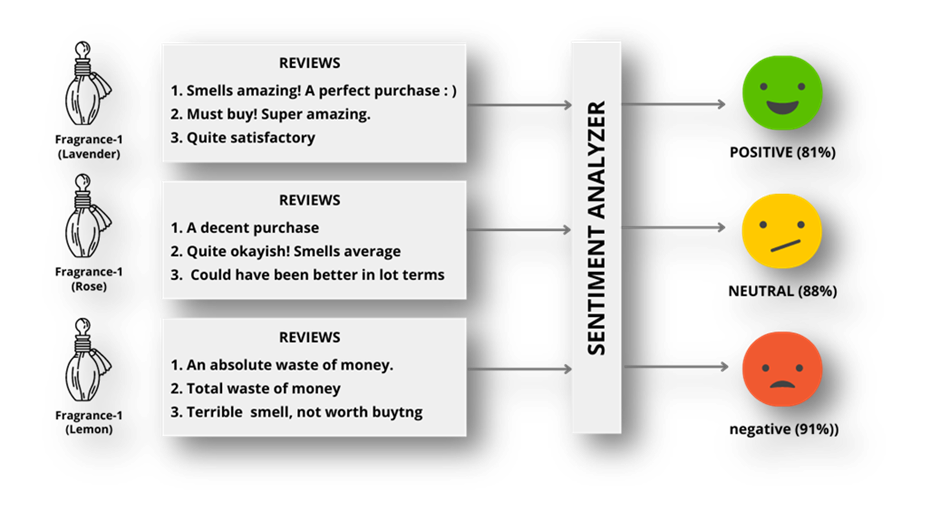
Sentiment analysis also known as opinion mining determines the sentiment or emotional tone of text data. This technique is particularly valuable for understanding customer opinions and feedback on social media, product reviews, and customer support interactions.
By continuously monitoring customer reactions,sentiment analysis helps track significant shifts in consumer behaviors and attitudes about products.
Advanced-Data Visualization
Advanced data visualization tools go beyond basic charts and graphs. They use interactive visuals such as heatmaps, network diagrams, and geographical mapping, to help marketers gain deeper insights from complex datasets. Data visualization tools enable marketers to spot patterns, trends, and correlations that might be challenging to identify through raw data alone.
Consider a global e-commerce platform that uses advanced data visualization to track user behavior on its website. They can create interactive dashboards that show how users from different regions navigate the site which products are popular in specific locations, and where users tend to drop off in the conversion funnel. This insight can inform localized marketing strategies and website optimizations.
Leveraging AI & Machine Learning
Artificial Intelligence (AI) and Machine Learning (ML) are revolutionizing data-driven marketing. These technologies enable marketers to automate tasks, personalize experiences, and make data-driven decisions at scale.
Chatbots
AI-powered conversational agents that interact with users in real-time. They can answer questions, provide product recommendations, and even assist with purchases. Research byGrand View Research estimates that the chatbot market size will reach $1.25 billion by 2025.
Recommendation Engines…
Recommendation engines, powered by ML algorithms, analyze user behavior and preferences to suggest relevant products or content. These engines are prevalent in e-commerce, streaming services, and content platforms.
Companies like Amazon and Netflix excel in this domain. Amazon’s recommendation engine drives approximately35% of its total revenue by recommending products that users are likely to purchase based on their browsing and purchase history.
Emerging Marketing Channels
The marketing landscape continues to evolve with the emergence of new channels driven by data and technology. Let’s explore some of these channels and how they are reshaping marketing strategies.
Voice Search
Voice search is becoming increasingly popular with the proliferation of voice-activated devices like smartphones and smart speakers. Optimizing content for voice search is essential as it requires a different approach than traditional text-based search engine optimization (SEO).
Brands are adapting by creating content that answers voice queries and optimizing their websites for voice-based interactions.
Augmented Reality (AR) and Virtual Reality (VR) Marketing
AR and VR technologies offer immersive experiences for users as they showcase products, offer virtual tours, and create interactive brand experiences. The AR & VR market worldwide is projected to grow by 13.72% (2023-2027) resulting in a market volume of US$52.05bn in 2027
IKEA has adopted AR to allow customers to visualize furniture in their homes before making a purchase decision, enhancing the shopping experience.
The Role of Data in Content Creation
Data is reshaping content creation. Advanced strategies like dynamic content generation and AI-driven content recommendation engines are driving content success.
Dynamic Content Generation
Dynamic content generation involves creating content that adapts in real-time based on user interactions or preferences. It’s particularly useful in email marketing, where personalized content can significantly improve engagement and conversion rates.
Consider an e-commerce company sending personalized product recommendations in their email campaigns. Dynamic content generation can ensure that each recipient sees products tailored to their interests and past browsing behavior.
It’s no wonder that 65% of marketing executives cite dynamic content in email marketing as the most effective personalization tactic.
AI-Driven Content Recommendation Engines
Content recommendation engines use machine learning algorithms to suggest articles, videos, products, or other content based on a user’s past behavior. These engines are prevalent in content platforms like news websites and streaming services.
Amazon is one of the country’s leading e-commerce platforms, offering a vast selection of products including electronics, clothing, books & more. To provide a highly personalized shopping experience to its users, Amazon employs an advanced AI-driven recommendation engine.
User Behavior Tracking… As users interact with the Amazon India website or mobile app, the recommendation engine continuously tracks their behavior:
Product Views… It monitors which products users view, the categories they explore, and how much time they spend on each product page.
Search Queries… The engine records the search queries users enter, which may indicate their current shopping interests or needs.
Purchase History… For registered users, the engine tracks their purchase history, including the types of products they buy, brands they prefer and price ranges they typically shop within.
User Interactions… It considers user interactions such as adding items to the cart, wishlisting products, and leaving product reviews.
Machine Learning Algorithms… Amazon’s recommendation engine relies on sophisticated machine learning algorithms including collaborative filtering, natural language processing (NLP), and deep learning, to analyze this vast amount of user data.
Here’s how the AI-driven recommendation engine operates in real-time: –
Anika, a registered user, opens the Amazon app on her smartphone to shop for a new laptop.
Real-Time Tracking… The engine detects Anika’s presence on the platform and begins tracking her behavior.
Current Behavior… Anika starts by entering her search query, “laptop for graphic design.”
Immediate Suggestions… In real-time, as Anika browses through the search results and laptop listings, the AI-driven engine generates immediate suggestions:
It recommends laptops known for their performance in graphic design such as those with powerful processors and dedicated graphics cards.
It highlights laptops from brands that Anika has previously purchased or shown interest in.
It offers a range of laptops across different price points, including options for budget-conscious shoppers and premium models.
Continuous Learning… As Anika adds laptops to her cart and compares different models, the recommendation engine learns from her real-time behavior. It understands that she is seeking a laptop that balances performance and affordability.
Dynamic Recommendations… After Anika makes her purchase, the recommendation engine continues to provide a personalized experience.
It updates her profile with her most recent purchase, influencing future recommendations.
It may suggest laptop accessories such as laptop bags or external hard drives based on her recent purchase.
The outcome…
Anika is delighted with her shopping experience on Amazon. She finds the personalized laptop recommendations helpful, saving her time in selecting the right product. This level of personalization keeps Anika engaged on the platform and encourages her to return for future purchases.
So, ultimately Amazon’s AI-driven content recommendation engine enhances user engagement and satisfaction, ultimately benefiting both users like Anika and Amazon India’s business growth as an e-commerce platform.
From predictive analytics to hyper-personalization and ethical data practices, the future of marketing belongs to those who harness the power of data while respecting consumer privacy.
As we move forward, the ability to adapt quickly and make data-driven decisions with precision will continue to be the hallmark of successful marketers. Stay informed, adapt, and be ready for the dynamic world of marketing in the years ahead…