As we look ahead to 2024, one thing becomes abundantly clear: Agile, data-driven marketers will be the ones to emerge victorious. In this two-part series, we’ll explore why these two pillars of modern marketing are essential for success and how they are reshaping the industry.
Agile Marketing…
Agile Marketing is more than just a buzzword; it’s a transformative approach that adapts the principles of Agile software development to the world of marketing as it emphasizes flexibility, customer-centricity, collaboration, and most importantly- data-driven decision-making. In Agile Marketing, teams work in short, iterative cycles, constantly reassessing and adapting their strategies based on real-time data & customer feedback.
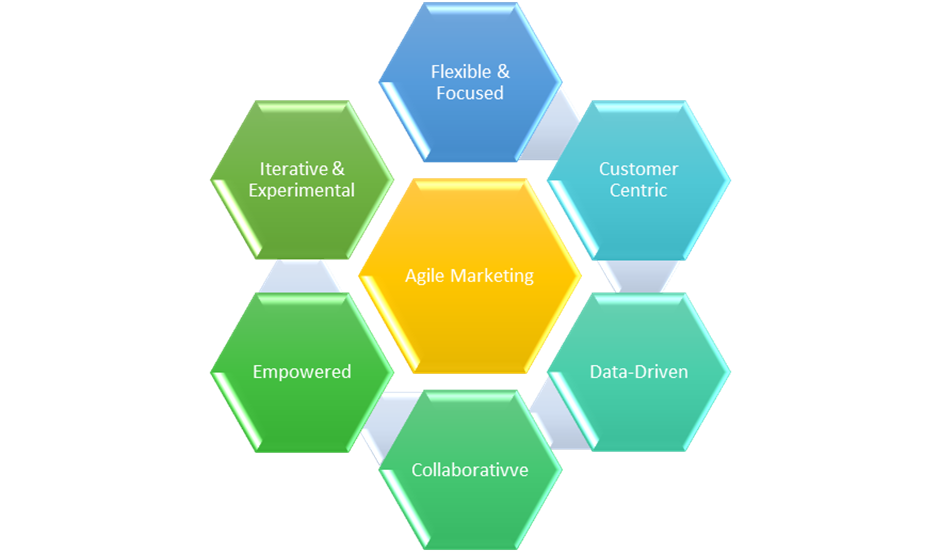
Key Principles of Agile Marketing…
Customer-Centricity… Customer needs are at the forefront of Agile Marketing. Understanding your audience and their preferences is crucial for success. Research by Deloitte and Touche found that companies that prioritize customer-centricity are 60% more profitable.
Iterative Approach… Agile Marketing is all about flexibility. Mainly involving breaking down projects into smaller, manageable tasks, allowing teams to make rapid adjustments. This iterative approach ensures that marketing efforts remain relevant and effective.
Collaboration & Cross-Functional Teams… Collaboration is a cornerstone of Agile Marketing. Cross-functional teams bring together diverse skill sets, fostering creativity and innovation. Companies with high collaboration levels are twice as likely to outperform their peers – according to a study by McKinsey.
Data-Driven Decision-Making… Data is the lifeblood of Agile Marketing. Marketers rely on real-time data to inform their decisions and measure the success of their campaigns. Data-driven organizations are 23 times more likely to acquire customers, six times as likely to retain customers, and 19 times as likely to be profitable.
Agile Marketing Success…
One of the examples of Agile Marketing in action is Spotify. The music streaming giant uses Agile methodologies to continuously refine its user experience. Spotify’s teams work in small, cross-functional groups called squads, allowing them to respond quickly to user feedback and market changes. This approach has contributed to Spotify’s impressive growth, with over 345 million active users worldwide.
The Data-Driven Marketing Shift…
Gone are the days of relying solely on gut instincts and creative flair. Modern marketing hinges on the collection, analysis, and application of data to make informed decisions and create personalized, effective campaigns.
The Power of Data in Marketing…
Data-driven marketing uses data to inform every aspect of your marketing strategy. This data can be sourced from a variety of places, including website analytics, customer surveys, social media metrics, and more. The ability to gather and analyze this data is a game-changer for marketers.
Recent studies show that companies using data-driven marketing are six times more likely to be profitable year-over-year compared to companies that don’t. This statistic alone underscores the critical role data plays in today’s marketing landscape.
Personalization and Customer Segmentation…
One of the most significant advantages of data-driven marketing is personalization. By analyzing customer data, you can create highly tailored marketing campaigns that speak directly to individual preferences. This personal touch can significantly boost conversion rates and customer loyalty.
Data-Driven Content Strategy…
Data-driven content strategy involves using data to inform your content creation and distribution efforts. You can identify the most relevant keywords, the most engaging content formats, and the optimal posting times.
Marketing Automation and Data…
Marketing automation platforms rely on data to streamline and personalize campaigns. Whether it’s automated email marketing, lead nurturing or drip campaigns, data is the driving force behind automation’s effectiveness.
Measuring ROI and Attribution Modeling…
Indeed, Data-driven marketing enables you to measure return on investment (ROI) more accurately. Attribution models help understand which marketing channels are most effective and how they contribute to your bottom line. Armed with this data, you can make data-backed decisions on where to allocate your marketing budget for maximum impact.
Case Studies of Data-Driven Success…
Amazon is a prime example of a data-driven marketing powerhouse. The e-commerce giant uses customer data to recommend products, personalize shopping experiences, and optimize pricing. Amazon’s recommendation engine is estimated to drive 35% of its total revenue. By analyzing customer behavior and purchase history, Amazon delivers a highly personalized shopping journey that keeps customers engaged and coming back for more.
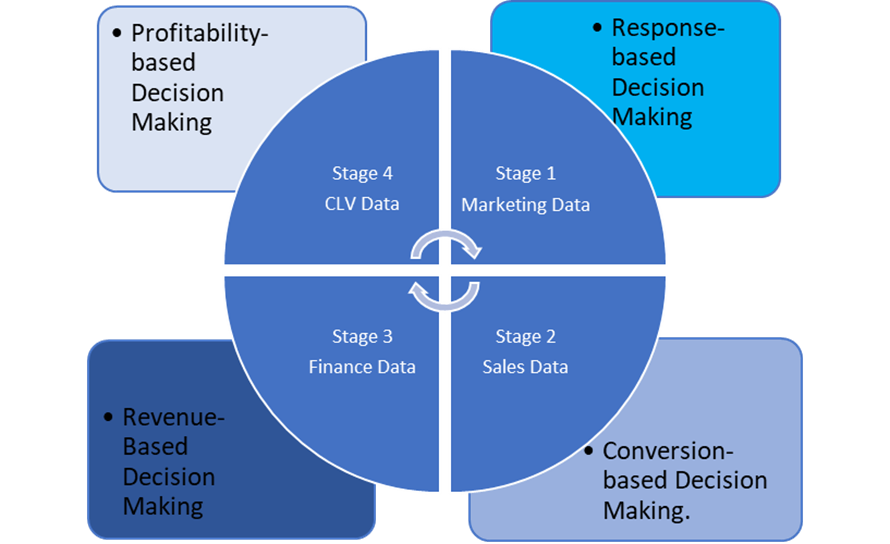
4 stages of Data-driven Marketing
Challenges and Future Trends…
Despite its many advantages, data-driven marketing isn’t without challenges. Marketers must navigate data privacy and compliance regulations like GDPR and CCPA while staying up-to-date with emerging trends like AI and predictive analytics.
The future of marketing belongs to those who can adapt quickly and make data-driven decisions with precision.
The Convergence of Agile & Data-Driven Marketing…
Agile methodologies complement data-driven marketing in several ways. Agile allows marketers to respond quickly to changing data and market conditions. For instance… if data shows that a specific marketing channel is underperforming, Agile teams can pivot & allocate resources elsewhere. This is how it’s done, isn’t it!?…
A notable example of the synergy between Agile & data-driven marketing is Airbnb. The company leverages data to understand traveler preferences and host behaviors. Using Agile methodologies Airbnb’s marketing teams rapidly create and test new marketing campaigns based on data insights. This has contributed to Airbnb’s impressive growth with millions of hosts and guests worldwide…
As of March 2022, there are over 6 million active listings and over 1 billion guest arrivals on the platform.
Not bad for a company that started with just 2 bookings!
Breaking Down Silos…
Silos refer to organizational barriers that hinder effective collaboration between different teams or departments within a company. These barriers can prevent the seamless flow of information, ideas, and resources, ultimately impeding the success of marketing initiatives.
In Agile Marketing where flexibility, rapid adaptation, and data-driven decision-making are paramount, silos can be particularly detrimental. When marketing teams, operate in isolation, critical insights and data often remain confined within specific units. This isolation limits the ability to respond swiftly to changing market conditions, adapt marketing strategies and optimize campaigns based on real-time data.
Similarly… in Data-Driven Marketing, silos can obstruct the efficient sharing and utilization of valuable information. Data collected by one team may hold significant relevance and potential for improvement to another but without collaboration, these insights remain trapped within siloed departments.
To address silos in Agile & Data-Driven Marketing, organizations must prioritize cross-functional collaboration, fostering a culture of open communication and knowledge-sharing. By breaking down these barriers, companies can harness the full potential of Agile methodologies and data-driven approaches resulting in more effective marketing strategies, better-informed decisions, and ultimately greater success in a dynamic digital landscape…
Investing in the right tools is essential. Marketing automation platforms, data analytics software & project management tools are crucial for executing Agile, data-driven strategies effectively.
Project Management Tools…
Agile marketing relies on efficient project management to keep teams aligned and projects on track. Project management tools facilitate collaboration, task assignment, project tracking, and resource allocation. They ensure that marketing initiatives stay on schedule and within budget.
A report by Capterra revealed that 83% of project managers use project management software emphasizing its widespread adoption across various industries.
Customer Relationship Management (CRM) Systems…
CRM systems are essential for data-driven marketing as they store and manage customer information. They enable segmentation, personalization, and targeted marketing efforts by providing a centralized hub for customer data. Marketers can use CRMs to track customer interactions, preferences, and purchase history.
The global CRM software market is projected to reach $113.46 billion by 2027 according to Statista.
To conclude…
In this first part of our series, we’ve explored the fundamental concepts of Agile and data-driven marketing and their importance in the ever-changing world of digital marketing. We’ve seen how companies like Spotify, Amazon, and Airbnb have leveraged these strategies to achieve remarkable success.
Stay tuned for Part 2, where we explore the advanced techniques and trends shaping Agile and data-driven marketing..