
FM

/home/u523506497/domains/mymelon.in/public_html/wp-admin UP

<?php
/**
 * Edit plugin file editor administration panel.
 *
 * @package WordPress
 * @subpackage Administration
 */

/** WordPress Administration Bootstrap */
require_once __DIR__ . '/admin.php';

if ( is_multisite() && ! is_network_admin() ) {
	wp_redirect( network_admin_url( 'plugin-editor.php' ) );
	exit;
}

if ( ! current_user_can( 'edit_plugins' ) ) {
	wp_die( __( 'Sorry, you are not allowed to edit plugins for this site.' ) );
}

// Used in the HTML title tag.
$title       = __( 'Edit Plugins' );
$parent_file = 'plugins.php';

$plugins = get_plugins();

if ( empty( $plugins ) ) {
	require_once ABSPATH . 'wp-admin/admin-header.php';
	?>
	<div class="wrap">
		<h1><?php echo esc_html( $title ); ?></h1>
		<?php
		wp_admin_notice(
			__( 'No plugins are currently available.' ),
			array(
				'id'                 => 'message',
				'additional_classes' => array( 'error' ),
			)
		);
		?>
	</div>
	<?php
	require_once ABSPATH . 'wp-admin/admin-footer.php';
	exit;
}

$file   = '';
$plugin = '';
if ( isset( $_REQUEST['file'] ) ) {
	$file = wp_unslash( $_REQUEST['file'] );
}

if ( isset( $_REQUEST['plugin'] ) ) {
	$plugin = wp_unslash( $_REQUEST['plugin'] );
}

if ( empty( $plugin ) ) {
	if ( $file ) {

		// Locate the plugin for a given plugin file being edited.
		$file_dirname = dirname( $file );
		foreach ( array_keys( $plugins ) as $plugin_candidate ) {
			if ( $plugin_candidate === $file || ( '.' !== $file_dirname && dirname( $plugin_candidate ) === $file_dirname ) ) {
				$plugin = $plugin_candidate;
				break;
			}
		}

		// Fallback to the file as the plugin.
		if ( empty( $plugin ) ) {
			$plugin = $file;
		}
	} else {
		$plugin = array_keys( $plugins );
		$plugin = $plugin[0];
	}
}

$plugin_files = get_plugin_files( $plugin );

if ( empty( $file ) ) {
	$file = $plugin_files[0];
}

$file      = validate_file_to_edit( $file, $plugin_files );
$real_file = WP_PLUGIN_DIR . '/' . $file;

$plugin_data = get_plugin_data( WP_PLUGIN_DIR . '/' . $plugin_files[0] );
$plugin_name = $plugin_data['Name'];

// Handle fallback editing of file when JavaScript is not available.
$edit_error     = null;
$posted_content = null;

if ( 'POST' === $_SERVER['REQUEST_METHOD'] ) {
	$edit_result = wp_edit_theme_plugin_file( wp_unslash( $_POST ) );

	if ( is_wp_error( $edit_result ) ) {
		$edit_error = $edit_result;

		if ( check_ajax_referer( 'edit-plugin_' . $file, 'nonce', false ) && isset( $_POST['newcontent'] ) ) {
			$posted_content = wp_unslash( $_POST['newcontent'] );
		}
	} else {
		wp_redirect(
			add_query_arg(
				array(
					'a'      => 1, // This means "success" for some reason.
					'plugin' => $plugin,
					'file'   => $file,
				),
				admin_url( 'plugin-editor.php' )
			)
		);
		exit;
	}
}

// List of allowable extensions.
$editable_extensions = wp_get_plugin_file_editable_extensions( $plugin );

if ( ! is_file( $real_file ) ) {
	wp_die( sprintf( '<p>%s</p>', __( 'File does not exist! Please double check the name and try again.' ) ) );
} else {
	// Get the extension of the file.
	if ( preg_match( '/\.([^.]+)$/', $real_file, $matches ) ) {
		$extension = strtolower( $matches[1] );

		// If extension is not in the acceptable list, skip it.
		if ( ! in_array( $extension, $editable_extensions, true ) ) {
			wp_die( sprintf( '<p>%s</p>', __( 'Files of this type are not editable.' ) ) );
		}
	}
}

get_current_screen()->add_help_tab(
	array(
		'id'      => 'overview',
		'title'   => __( 'Overview' ),
		'content' =>
				'<p>' . __( 'You can use the plugin file editor to make changes to any of your plugins&#8217; individual PHP files. Be aware that if you make changes, plugins updates will overwrite your customizations.' ) . '</p>' .
				'<p>' . __( 'Choose a plugin to edit from the dropdown menu and click the Select button. Click once on any file name to load it in the editor, and make your changes. Do not forget to save your changes (Update File) when you are finished.' ) . '</p>' .
				'<p>' . __( 'The documentation menu below the editor lists the PHP functions recognized in the plugin file. Clicking Look Up takes you to a web page about that particular function.' ) . '</p>' .
				'<p id="editor-keyboard-trap-help-1">' . __( 'When using a keyboard to navigate:' ) . '</p>' .
				'<ul>' .
				'<li id="editor-keyboard-trap-help-2">' . __( 'In the editing area, the Tab key enters a tab character.' ) . '</li>' .
				'<li id="editor-keyboard-trap-help-3">' . __( 'To move away from this area, press the Esc key followed by the Tab key.' ) . '</li>' .
				'<li id="editor-keyboard-trap-help-4">' . __( 'Screen reader users: when in forms mode, you may need to press the Esc key twice.' ) . '</li>' .
				'</ul>' .
				'<p>' . __( 'If you want to make changes but do not want them to be overwritten when the plugin is updated, you may be ready to think about writing your own plugin. For information on how to edit plugins, write your own from scratch, or just better understand their anatomy, check out the links below.' ) . '</p>' .
				( is_network_admin() ? '<p>' . __( 'Any edits to files from this screen will be reflected on all sites in the network.' ) . '</p>' : '' ),
	)
);

get_current_screen()->set_help_sidebar(
	'<p><strong>' . __( 'For more information:' ) . '</strong></p>' .
	'<p>' . __( '<a href="https://developer.wordpress.org/advanced-administration/plugins/editor-screen/">Documentation on Editing Plugins</a>' ) . '</p>' .
	'<p>' . __( '<a href="https://developer.wordpress.org/plugins/">Documentation on Writing Plugins</a>' ) . '</p>' .
	'<p>' . __( '<a href="https://wordpress.org/support/forums/">Support forums</a>' ) . '</p>'
);

$settings = array(
	'codeEditor' => wp_enqueue_code_editor( array( 'file' => $real_file ) ),
);
wp_enqueue_script( 'wp-theme-plugin-editor' );
wp_add_inline_script( 'wp-theme-plugin-editor', sprintf( 'jQuery( function( $ ) { wp.themePluginEditor.init( $( "#template" ), %s ); } )', wp_json_encode( $settings, JSON_HEX_TAG | JSON_UNESCAPED_SLASHES ) ) );
wp_add_inline_script( 'wp-theme-plugin-editor', 'wp.themePluginEditor.themeOrPlugin = "plugin";' );

require_once ABSPATH . 'wp-admin/admin-header.php';

update_recently_edited( WP_PLUGIN_DIR . '/' . $file );

if ( ! empty( $posted_content ) ) {
	$content = $posted_content;
} else {
	$content = file_get_contents( $real_file );
}

if ( str_ends_with( $real_file, '.php' ) ) {
	$functions = wp_doc_link_parse( $content );

	if ( ! empty( $functions ) ) {
		$docs_select  = '<select name="docs-list" id="docs-list">';
		$docs_select .= '<option value="">' . esc_html__( 'Function Name&hellip;' ) . '</option>';

		foreach ( $functions as $function ) {
			$docs_select .= '<option value="' . esc_attr( $function ) . '">' . esc_html( $function ) . '()</option>';
		}

		$docs_select .= '</select>';
	}
}

$content = esc_textarea( $content );
?>
<div class="wrap">
<h1><?php echo esc_html( $title ); ?></h1>

<?php
if ( isset( $_GET['a'] ) ) :
	wp_admin_notice(
		__( 'File edited successfully.' ),
		array(
			'additional_classes' => array( 'updated', 'is-dismissible' ),
			'id'                 => 'message',
		)
	);
elseif ( is_wp_error( $edit_error ) ) :
	$error   = esc_html( $edit_error->get_error_message() ? $edit_error->get_error_message() : $edit_error->get_error_code() );
	$message = '<p>' . __( 'There was an error while trying to update the file. You may need to fix something and try updating again.' ) . '</p>
	<pre>' . $error . '</pre>';
	wp_admin_notice(
		$message,
		array(
			'type'           => 'error',
			'id'             => 'message',
			'paragraph_wrap' => false,
		)
	);
endif;
?>

<div class="fileedit-sub">
<div class="alignleft">
<h2>
	<?php
	if ( is_plugin_active( $plugin ) ) {
		if ( is_writable( $real_file ) ) {
			/* translators: %s: Plugin name. */
			printf( __( 'Editing %s (active)' ), '<strong>' . esc_html( $plugin_name ) . '</strong>' );
		} else {
			/* translators: %s: Plugin name. */
			printf( __( 'Browsing %s (active)' ), '<strong>' . esc_html( $plugin_name ) . '</strong>' );
		}
	} else {
		if ( is_writable( $real_file ) ) {
			/* translators: %s: Plugin name. */
			printf( __( 'Editing %s (inactive)' ), '<strong>' . esc_html( $plugin_name ) . '</strong>' );
		} else {
			/* translators: %s: Plugin name. */
			printf( __( 'Browsing %s (inactive)' ), '<strong>' . esc_html( $plugin_name ) . '</strong>' );
		}
	}
	?>
</h2>
<?php
printf(
	/* translators: %s: File path. */
	' <span><strong>' . __( 'File: %s' ) . '</strong></span>',
	esc_html( $file )
);
?>
</div>
<div class="alignright">
	<form action="plugin-editor.php" method="get">
		<label for="plugin" id="theme-plugin-editor-selector"><?php _e( 'Select plugin to edit:' ); ?> </label>
		<select name="plugin" id="plugin">
		<?php
		foreach ( $plugins as $plugin_key => $a_plugin ) {
			$plugin_name = $a_plugin['Name'];
			if ( $plugin_key === $plugin ) {
				$selected = " selected='selected'";
			} else {
				$selected = '';
			}
			$plugin_name = esc_attr( $plugin_name );
			$plugin_key  = esc_attr( $plugin_key );
			echo "\n\t<option value=\"$plugin_key\" $selected>$plugin_name</option>";
		}
		?>
		</select>
		<?php submit_button( __( 'Select' ), '', 'Submit', false ); ?>
	</form>
</div>
<br class="clear" />
</div>

<div id="templateside">
	<h2 id="plugin-files-label"><?php _e( 'Plugin Files' ); ?></h2>

	<?php
	$plugin_editable_files = array();
	foreach ( $plugin_files as $plugin_file ) {
		if ( preg_match( '/\.([^.]+)$/', $plugin_file, $matches ) && in_array( $matches[1], $editable_extensions, true ) ) {
			$plugin_editable_files[] = $plugin_file;
		}
	}
	?>
	<ul role="tree" aria-labelledby="plugin-files-label">
	<li role="treeitem" tabindex="-1" aria-expanded="true" aria-level="1" aria-posinset="1" aria-setsize="1">
		<ul role="group">
			<?php wp_print_plugin_file_tree( wp_make_plugin_file_tree( $plugin_editable_files ) ); ?>
		</ul>
	</li>
	</ul>
</div>

<form name="template" id="template" action="plugin-editor.php" method="post">
	<?php wp_nonce_field( 'edit-plugin_' . $file, 'nonce' ); ?>
	<div>
		<label for="newcontent" id="theme-plugin-editor-label"><?php _e( 'Selected file content:' ); ?></label>
		<textarea cols="70" rows="25" name="newcontent" id="newcontent" aria-describedby="editor-keyboard-trap-help-1 editor-keyboard-trap-help-2 editor-keyboard-trap-help-3 editor-keyboard-trap-help-4"><?php echo $content; ?></textarea>
		<input type="hidden" name="action" value="update" />
		<input type="hidden" name="file" value="<?php echo esc_attr( $file ); ?>" />
		<input type="hidden" name="plugin" value="<?php echo esc_attr( $plugin ); ?>" />
	</div>

	<?php if ( ! empty( $docs_select ) ) : ?>
		<div id="documentation" class="hide-if-no-js">
			<label for="docs-list"><?php _e( 'Documentation:' ); ?></label>
			<?php echo $docs_select; ?>
			<input disabled id="docs-lookup" type="button" class="button" value="<?php esc_attr_e( 'Look Up' ); ?>" onclick="if ( '' !== jQuery('#docs-list').val() ) { window.open( 'https://api.wordpress.org/core/handbook/1.0/?function=' + escape( jQuery( '#docs-list' ).val() ) + '&amp;locale=<?php echo urlencode( get_user_locale() ); ?>&amp;version=<?php echo urlencode( get_bloginfo( 'version' ) ); ?>&amp;redirect=true'); }" />
		</div>
	<?php endif; ?>

	<?php if ( is_writable( $real_file ) ) : ?>
		<div class="editor-notices">
		<?php
		if ( in_array( $plugin, (array) get_option( 'active_plugins', array() ), true ) ) {
			wp_admin_notice(
				__( '<strong>Warning:</strong> Making changes to active plugins is not recommended.' ),
				array(
					'type'               => 'warning',
					'additional_classes' => array( 'inline', 'active-plugin-edit-warning' ),
				)
			);
		}
		?>
		</div>
		<p class="submit">
			<?php submit_button( __( 'Update File' ), 'primary', 'submit', false ); ?>
			<span class="spinner"></span>
		</p>
	<?php else : ?>
		<p>
			<?php
			printf(
				/* translators: %s: Documentation URL. */
				__( 'You need to make this file writable before you can save your changes. See <a href="%s">Changing File Permissions</a> for more information.' ),
				__( 'https://developer.wordpress.org/advanced-administration/server/file-permissions/' )
			);
			?>
		</p>
	<?php endif; ?>

	<?php wp_print_file_editor_templates(); ?>
</form>
<br class="clear" />
</div>
<?php
$dismissed_pointers = explode( ',', (string) get_user_meta( get_current_user_id(), 'dismissed_wp_pointers', true ) );
if ( ! in_array( 'plugin_editor_notice', $dismissed_pointers, true ) ) :
	// Get a back URL.
	$referer = wp_get_referer();

	$excluded_referer_basenames = array( 'plugin-editor.php', 'wp-login.php' );

	$return_url = admin_url( '/' );
	if ( $referer ) {
		$referer_path = parse_url( $referer, PHP_URL_PATH );
		if ( is_string( $referer_path ) && ! in_array( basename( $referer_path ), $excluded_referer_basenames, true ) ) {
			$return_url = $referer;
		}
	}
	?>
	<div id="file-editor-warning" class="notification-dialog-wrap file-editor-warning hide-if-no-js hidden">
		<div class="notification-dialog-background"></div>
		<div class="notification-dialog">
			<div class="file-editor-warning-content">
				<div class="file-editor-warning-message">
					<h1><?php _e( 'Heads up!' ); ?></h1>
					<p><?php _e( 'You appear to be making direct edits to your plugin in the WordPress dashboard. Editing plugins directly is not recommended as it may introduce incompatibilities that break your site and your changes may be lost in future updates.' ); ?></p>
					<p><?php _e( 'If you absolutely have to make direct edits to this plugin, use a file manager to create a copy with a new name and hang on to the original. That way, you can re-enable a functional version if something goes wrong.' ); ?></p>
				</div>
				<p>
					<a class="button file-editor-warning-go-back" href="<?php echo esc_url( $return_url ); ?>"><?php _e( 'Go back' ); ?></a>
					<button type="button" class="file-editor-warning-dismiss button button-primary"><?php _e( 'I understand' ); ?></button>
				</p>
			</div>
		</div>
	</div>
	<?php
endif; // Editor warning notice.

require_once ABSPATH . 'wp-admin/admin-footer.php';
about.php17994V
admin-ajax.php5146V
admin-footer.php2804V
admin-functions.php472V
admin-header.php9284V
admin-post.php2021V
admin.php12935V
async-upload.php5604V
authorize-application.php10335V
comment.php11643V
contribute.php5656V
credits.php4141V
css-
custom-background.php482V
custom-header.php492V
customize.php11586V
edit-comments.php14484V
edit-form-advanced.php29481V
edit-form-blocks.php15528V
edit-form-comment.php13980V
edit-link-form.php6347V
edit-tag-form.php10658V
edit-tags.php22510V
edit.php19952V
erase-personal-data.php7505V
error_log73542V
export-personal-data.php7940V
export.php11265V
font-library.php1480V
freedoms.php4574V
images-
import.php7766V
includes-
index.php7864V
install-helper.php6961V
install.php18375V
js-
link-add.php934V
link-manager.php4361V
link-parse-opml.php2721V
link.php2957V
load-scripts.php2070V
load-styles.php2995V
maint-
media-new.php3249V
media-upload.php3668V
media.php819V
menu-header.php10052V
menu.php18134V
moderation.php307V
ms-admin.php196V
ms-delete-site.php4613V
ms-edit.php216V
ms-options.php229V
ms-sites.php215V
ms-themes.php217V
ms-upgrade-network.php219V
ms-users.php215V
my-sites.php4831V
nav-menus.php50199V
network-
network.php5523V
options-connectors.php1543V
options-discussion.php16403V
options-general.php22855V
options-head.php614V
options-media.php6640V
options-permalink.php22491V
options-privacy.php10704V
options-reading.php10198V
options-writing.php9404V
options.php14266V
plugin-editor.php14071V
plugin-install.php7433V
plugins.php30744V
post-new.php2768V
post.php10821V
press-this.php2470V
privacy-policy-guide.php3756V
privacy.php2512V
profile.php283V
revision.php5836V
setup-config.php17928V
site-editor.php12483V
site-health-info.php4173V
site-health.php10427V
term.php2249V
theme-editor.php17279V
theme-install.php24315V
themes.php49728V
tools-decryption.php0V
tools.php3514V
update-core.php46202V
update.php13062V
upgrade-functions.php341V
upgrade.php6390V
upload.php15292V
user-
user-edit.php41844V
user-new.php24664V
users.php25698V
widgets-form-blocks.php5235V
widgets-form.php19588V
widgets.php1112V
Agile Marketing - Data-Driven Marketers Will Win 2024 (Part 1)
Skip to content Skip to sidebar Skip to footer

Agile, Data-Driven Marketers Will Win 2024 (Part 1)

As we look ahead to 2024, one thing becomes abundantly clear: Agile, data-driven marketers will be the ones to emerge victorious. In this two-part series, we’ll explore why these two pillars of modern marketing are essential for success and how they are reshaping the industry.

Agile Marketing…

Agile Marketing is more than just a buzzword; it’s a transformative approach that adapts the principles of Agile software development to the world of marketing as it emphasizes flexibility, customer-centricity, collaboration, and most importantly- data-driven decision-making. In Agile Marketing, teams work in short, iterative cycles, constantly reassessing and adapting their strategies based on real-time data & customer feedback.
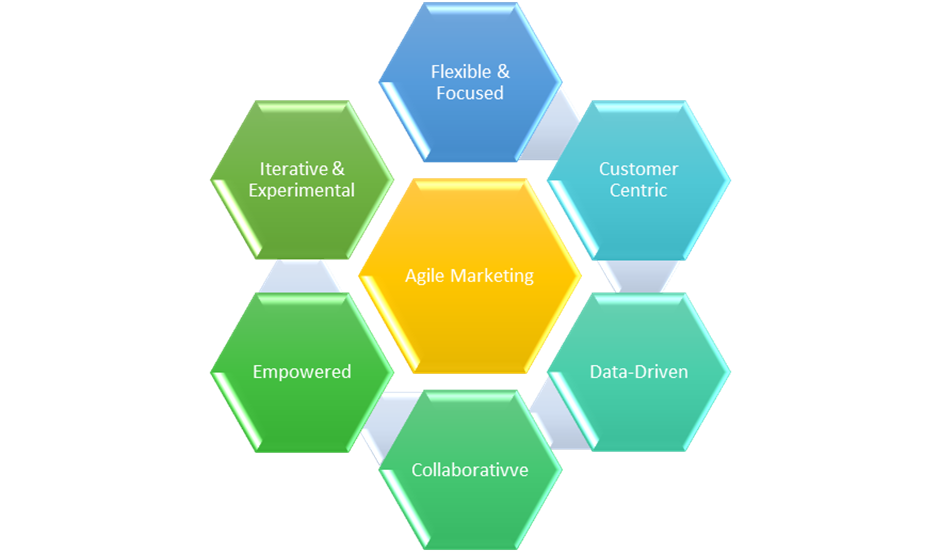
Agile Marketing

Key Principles of Agile Marketing…

Customer-Centricity… Customer needs are at the forefront of Agile Marketing. Understanding your audience and their preferences is crucial for success. Research by Deloitte and Touche found that companies that prioritize customer-centricity are 60% more profitable.

Iterative Approach… Agile Marketing is all about flexibility. Mainly involving breaking down projects into smaller, manageable tasks, allowing teams to make rapid adjustments. This iterative approach ensures that marketing efforts remain relevant and effective.

Collaboration & Cross-Functional Teams… Collaboration is a cornerstone of Agile Marketing. Cross-functional teams bring together diverse skill sets, fostering creativity and innovation. Companies with high collaboration levels are twice as likely to outperform their peers – according to a study by McKinsey.

Data-Driven Decision-Making… Data is the lifeblood of Agile Marketing. Marketers rely on real-time data to inform their decisions and measure the success of their campaigns. Data-driven organizations are 23 times more likely to acquire customers, six times as likely to retain customers, and 19 times as likely to be profitable.

Agile Marketing Success…

One of the examples of Agile Marketing in action is Spotify. The music streaming giant uses Agile methodologies to continuously refine its user experience. Spotify’s teams work in small, cross-functional groups called squads, allowing them to respond quickly to user feedback and market changes. This approach has contributed to Spotify’s impressive growth, with over 345 million active users worldwide.

The Data-Driven Marketing Shift…

Gone are the days of relying solely on gut instincts and creative flair. Modern marketing hinges on the collection, analysis, and application of data to make informed decisions and create personalized, effective campaigns.

The Power of Data in Marketing…

Data-driven marketing uses data to inform every aspect of your marketing strategy. This data can be sourced from a variety of places, including website analytics, customer surveys, social media metrics, and more. The ability to gather and analyze this data is a game-changer for marketers.

Recent studies show that companies using data-driven marketing are six times more likely to be profitable year-over-year compared to companies that don’t. This statistic alone underscores the critical role data plays in today’s marketing landscape.

Personalization and Customer Segmentation…

One of the most significant advantages of data-driven marketing is personalization. By analyzing customer data, you can create highly tailored marketing campaigns that speak directly to individual preferences. This personal touch can significantly boost conversion rates and customer loyalty.

Data-Driven Content Strategy…

Data-driven content strategy involves using data to inform your content creation and distribution efforts. You can identify the most relevant keywords, the most engaging content formats, and the optimal posting times.

Marketing Automation and Data…

Marketing automation platforms rely on data to streamline and personalize campaigns. Whether it’s automated email marketing, lead nurturing or drip campaigns, data is the driving force behind automation’s effectiveness.

Measuring ROI and Attribution Modeling…

Indeed, Data-driven marketing enables you to measure return on investment (ROI) more accurately. Attribution models help understand which marketing channels are most effective and how they contribute to your bottom line. Armed with this data, you can make data-backed decisions on where to allocate your marketing budget for maximum impact.

Case Studies of Data-Driven Success…

Amazon is a prime example of a data-driven marketing powerhouse. The e-commerce giant uses customer data to recommend products, personalize shopping experiences, and optimize pricing. Amazon’s recommendation engine is estimated to drive 35% of its total revenue. By analyzing customer behavior and purchase history, Amazon delivers a highly personalized shopping journey that keeps customers engaged and coming back for more.
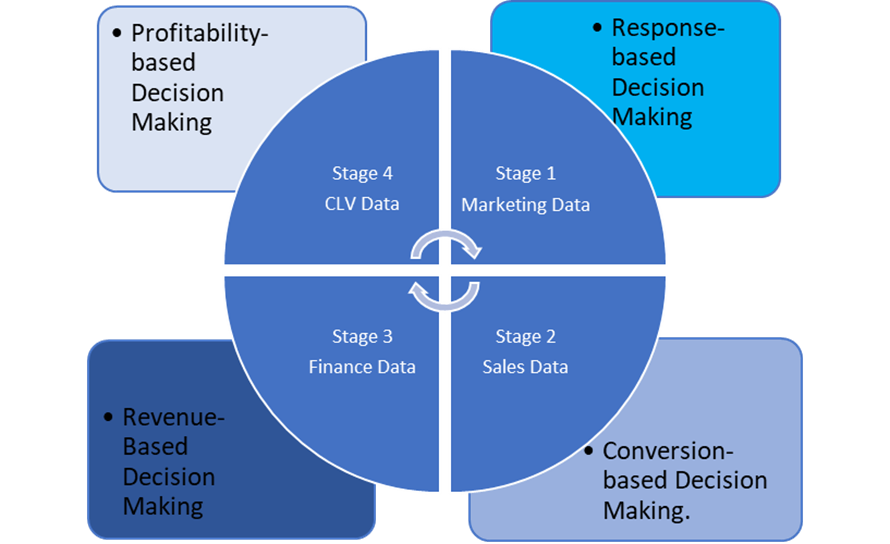
4 stages of Data-driven Marketing

Challenges and Future Trends…

Despite its many advantages, data-driven marketing isn’t without challenges. Marketers must navigate data privacy and compliance regulations like GDPR and CCPA while staying up-to-date with emerging trends like AI and predictive analytics.

The future of marketing belongs to those who can adapt quickly and make data-driven decisions with precision.

The Convergence of Agile & Data-Driven Marketing…

Agile methodologies complement data-driven marketing in several ways. Agile allows marketers to respond quickly to changing data and market conditions. For instance… if data shows that a specific marketing channel is underperforming, Agile teams can pivot & allocate resources elsewhere. This is how it’s done, isn’t it!?…

A notable example of the synergy between Agile & data-driven marketing is Airbnb. The company leverages data to understand traveler preferences and host behaviors. Using Agile methodologies Airbnb’s marketing teams rapidly create and test new marketing campaigns based on data insights. This has contributed to Airbnb’s impressive growth with millions of hosts and guests worldwide…

As of March 2022, there are over 6 million active listings and over 1 billion guest arrivals on the platform.

Not bad for a company that started with just 2 bookings!

Breaking Down Silos…

Silos refer to organizational barriers that hinder effective collaboration between different teams or departments within a company. These barriers can prevent the seamless flow of information, ideas, and resources, ultimately impeding the success of marketing initiatives.

In Agile Marketing where flexibility, rapid adaptation, and data-driven decision-making are paramount, silos can be particularly detrimental. When marketing teams, operate in isolation, critical insights and data often remain confined within specific units. This isolation limits the ability to respond swiftly to changing market conditions, adapt marketing strategies and optimize campaigns based on real-time data.

Similarly… in Data-Driven Marketing, silos can obstruct the efficient sharing and utilization of valuable information. Data collected by one team may hold significant relevance and potential for improvement to another but without collaboration, these insights remain trapped within siloed departments.

To address silos in Agile & Data-Driven Marketing, organizations must prioritize cross-functional collaboration, fostering a culture of open communication and knowledge-sharing. By breaking down these barriers, companies can harness the full potential of Agile methodologies and data-driven approaches resulting in more effective marketing strategies, better-informed decisions, and ultimately greater success in a dynamic digital landscape…

Investing in the right tools is essential. Marketing automation platforms, data analytics software & project management tools are crucial for executing Agile, data-driven strategies effectively.

Project Management Tools…

Agile marketing relies on efficient project management to keep teams aligned and projects on track. Project management tools facilitate collaboration, task assignment, project tracking, and resource allocation. They ensure that marketing initiatives stay on schedule and within budget.

A report by Capterra revealed that 83% of project managers use project management software emphasizing its widespread adoption across various industries.

Customer Relationship Management (CRM) Systems…

CRM systems are essential for data-driven marketing as they store and manage customer information. They enable segmentation, personalization, and targeted marketing efforts by providing a centralized hub for customer data. Marketers can use CRMs to track customer interactions, preferences, and purchase history.

The global CRM software market is projected to reach $113.46 billion by 2027 according to Statista.

To conclude…

In this first part of our series, we’ve explored the fundamental concepts of Agile and data-driven marketing and their importance in the ever-changing world of digital marketing. We’ve seen how companies like Spotify, Amazon, and Airbnb have leveraged these strategies to achieve remarkable success.

Stay tuned for Part 2, where we explore the advanced techniques and trends shaping Agile and data-driven marketing..

Leave a comment