For many businesses in India, the festive season is one of the busiest periods of the year. Brands invest heavily in advertising, launch special offers, introduce new collections, collaborate with influencers, and compete aggressively for customer attention.
From Diwali promotions and Dhanteras offers to wedding season campaigns and year-end sales, businesses do everything possible to maximise their visibility and revenue during this period.
But what happens when the festive season ends?
Advertising budgets are reduced. Social media activity becomes less frequent. Promotional campaigns disappear, and businesses often return to their usual marketing routines.
This is where an important opportunity gets missed.
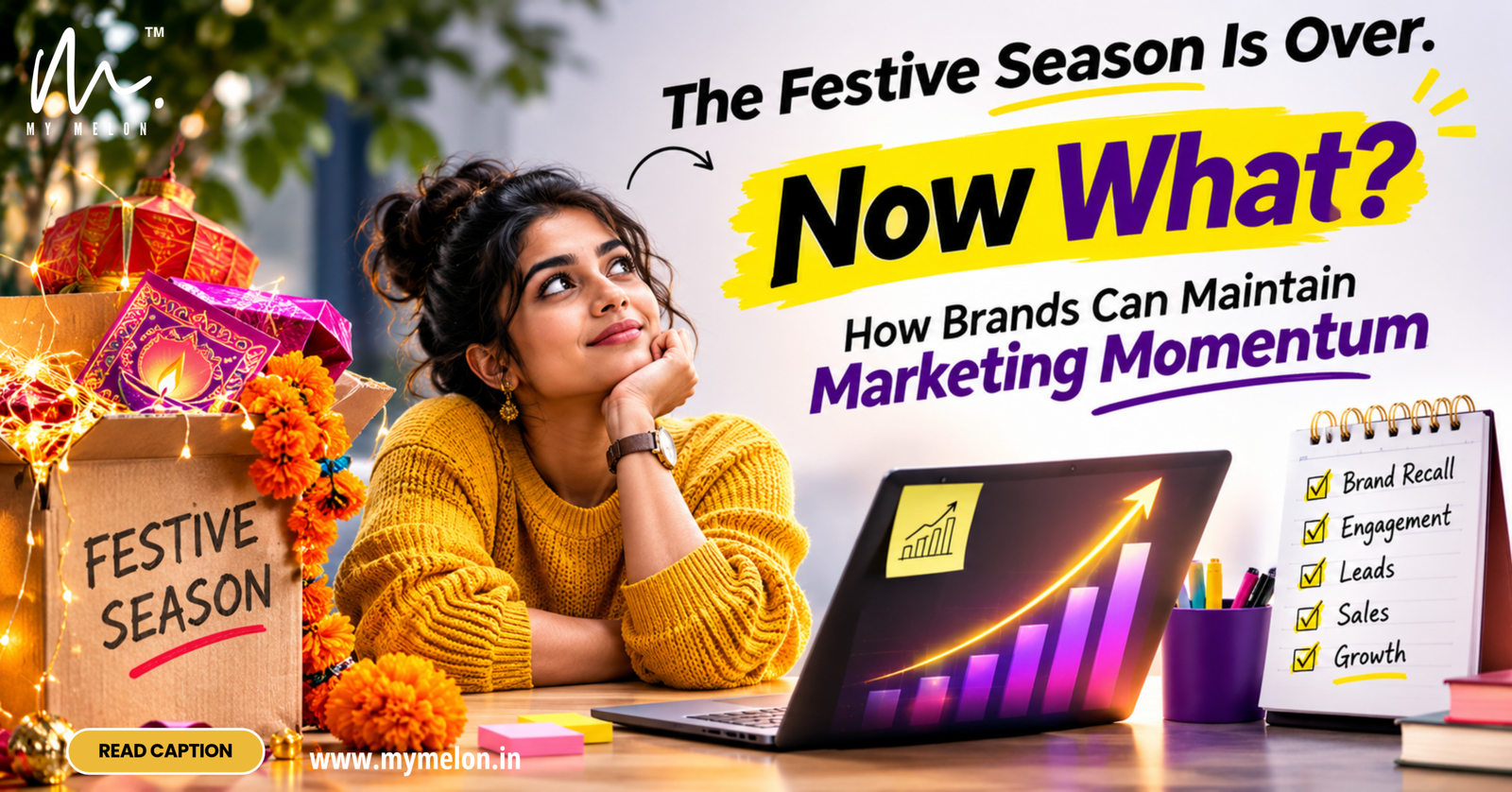
The end of the festive season should not mean the end of your marketing momentum.
Think about it. Your business may have acquired hundreds of new customers, attracted thousands of website visitors, generated enquiries, and built significant brand awareness during the festive period.
Why allow all that attention to disappear simply because the season is over?
The businesses that achieve sustainable growth understand that marketing is not about performing exceptionally during a few important months. It is about maintaining visibility, building customer relationships, and creating demand throughout the year.
In this article, we explore how businesses can maintain marketing momentum after the festive season and turn seasonal success into long-term growth.
1. Don’t Let Your Brand Disappear After the Festive Season
One of the most common marketing mistakes businesses make is becoming less active immediately after a major sales period.
During Diwali, a brand might publish multiple posts every week, run advertisements, collaborate with influencers, and communicate regularly with customers.
A few weeks later, the same brand becomes almost invisible.
This creates a gap in customer communication.
Remember, customers don’t stop discovering new brands or evaluating products just because a festival has ended. Their purchasing decisions continue throughout the year.
For example:
-
Someone who purchased festive clothing may soon look for wedding outfits.
-
A customer who purchased home decor may consider upgrading other parts of their home.
-
Someone who explored your website during Diwali may be interested in purchasing later.
-
A business that enquired about corporate gifting may require other services in the coming months.
Your brand needs to remain present during these moments.
This doesn’t mean maintaining the same advertising budget or posting promotional content every day.
It means developing a consistent marketing presence that keeps your business relevant.
Visibility should be a continuous business activity, not a seasonal experiment.
2. Turn Festive Season Customers Into Long-Term Customers
Acquiring a new customer requires time, effort, and money.
Businesses invest in advertisements, promotional offers, influencer collaborations, content creation, and other activities to encourage someone to make their first purchase.
But what happens after the purchase?
Many businesses immediately shift their attention towards acquiring new customers and forget about the people who have already purchased from them.
This is a missed opportunity.
Existing customers are already familiar with your brand. They have experienced your product or service and may be more comfortable purchasing from you again.
Instead of treating festive customers as one-time buyers, build a strategy to retain them.
How businesses can encourage repeat purchases
Segment your customers
Identify customers based on their purchase history, interests, product preferences, and engagement.
Send relevant recommendations
Recommend products or services that complement their previous purchases.
Introduce loyalty benefits
Offer exclusive rewards, early access, or special privileges to returning customers.
Stay connected through email and WhatsApp
Share useful updates, new arrivals, product recommendations, and relevant offers.
Ask for feedback
Understand what customers liked and where their experience could improve.
For example, an e-commerce skincare brand that acquired customers during Diwali can introduce them to complementary products, skincare routines, and educational content.
Instead of constantly pushing discounts, the brand can build a relationship around customer needs.
The objective is simple: give customers a reason to return.
3. Shift From Festive Promotions to Value-Driven Content
During the festive season, promotional content naturally dominates marketing communication.
Brands talk about discounts, limited-period offers, special collections, and product launches.
However, continuing the same promotional approach throughout the year can make communication repetitive.
Customers don’t want to see advertisements every time they interact with a brand.
They also want information, inspiration, education, and entertainment.
This is why businesses should diversify their content strategy after the festive season.
Content ideas businesses can explore
| Content category | Examples |
|---|---|
| Educational | Guides, tutorials, industry insights |
| Informational | Product features, service explanations, FAQs |
| Entertaining | Relatable reels, industry humour, trends |
| Trust-building | Customer testimonials, case studies, reviews |
| Behind-the-scenes | Team activities, product development, business operations |
| Thought leadership | Founder opinions, industry observations, expert insights |
For example, a real estate company shouldn’t communicate only through property advertisements.
It can publish content about investment considerations, location comparisons, home-buying mistakes, and market developments.
Similarly, a manufacturing company can share product applications, industry innovations, production processes, and customer success stories.
Good content keeps your audience interested even when they aren’t ready to purchase.
4. Reassess Your Marketing Budget and Invest With Better Clarity
Many businesses increase their marketing budgets during festive periods because competition for customer attention is high.
But after the season ends, some reduce spending without analysing campaign performance.
A better approach is to review what actually worked.
Instead of making decisions based entirely on impressions or total sales, evaluate the performance of individual channels and campaigns.
Ask questions such as:
-
Which advertising campaigns generated the most qualified leads?
-
Which products attracted the highest customer interest?
-
Which audience segments converted better?
-
Which creatives generated meaningful engagement?
-
How many customers made repeat purchases?
-
Which channels delivered the strongest return on investment?
Use these insights to plan your next marketing cycle.
For example, if a Meta Ads campaign generated significant website traffic but very few purchases, investigate the landing page, product pricing, checkout experience, and audience quality before increasing the budget.
Similarly, if Google Search Ads generated qualified enquiries at a sustainable cost, consider maintaining or expanding those campaigns.
The idea is not to spend more money.
It is to make better marketing decisions with the data you already have.
5. Invest in SEO Before Your Next Sales Season
Paid advertising can generate immediate visibility, but businesses should also invest in channels that can build long-term organic traffic.
Search Engine Optimisation (SEO) is one of those channels.
Imagine someone searching for:
-
Best skincare products for winter.
-
Wedding photographers in Delhi.
-
Office furniture manufacturers in India.
-
Best residential areas to invest in Gurgaon.
-
Digital marketing agency in Delhi.
If your website appears for relevant searches, you have an opportunity to attract potential customers without relying entirely on paid advertisements.
The period after the festive season can be an excellent opportunity to strengthen your organic search presence.
What businesses should focus on
Keyword research: Identify what potential customers are searching for.
Content development: Publish helpful blogs, guides, and landing pages around relevant search queries.
Technical SEO: Improve website speed, crawlability, indexing, mobile usability, and overall website performance.
On-page SEO: Optimise page titles, meta descriptions, headings, internal links, and content structure.
Local SEO: Strengthen your Google Business Profile and location-specific visibility.
Authority building: Develop relevant industry content and earn quality backlinks.
SEO requires consistency. Businesses that start investing only when they urgently need leads often underestimate the time required to build organic visibility.
The best time to strengthen your search presence is before the next major demand cycle begins.
6. Use Retargeting to Reconnect With Interested Customers
Not everyone who visits your website or interacts with your advertisement is ready to purchase immediately.
Some visitors are comparing alternatives. Others may be waiting for the right time, checking prices, or discussing their purchase with family.
These people should not be treated as completely new prospects.
Retargeting allows businesses to reconnect with audiences who have already interacted with their brand, subject to applicable platform eligibility and privacy requirements.
Potential retargeting audiences include:
-
Previous website visitors.
-
Product page visitors.
-
People who added products to their carts.
-
Instagram and Facebook engagers.
-
Video viewers.
-
Previous leads and customers, where eligible.
However, showing the same festive advertisement repeatedly is not a good strategy.
Change your communication according to the customer’s previous interaction.
For example:
Website visitors: Show product benefits, customer reviews, or useful information.
Product viewers: Share product demonstrations or relevant alternatives.
Abandoned cart visitors: Send appropriate reminders or address common purchase concerns.
Previous customers: Introduce complementary products or new collections.
Video viewers: Share more detailed content about your brand or offering.
Retargeting works best when it helps customers move forward in their buying journey rather than repeatedly asking them to purchase.
7. Build Your Brand Beyond Seasonal Campaigns
A brand is not built through one successful Diwali campaign or a few weeks of aggressive advertising.
It is built through consistent communication, customer experience, positioning, and trust.
Businesses that focus only on seasonal sales often become dependent on discounts and promotional campaigns.
When there is no special offer, customers may have little reason to engage with them.
This is where brand building becomes important.
Ask yourself:
-
What should customers remember about your business?
-
What makes your brand different from competitors?
-
What values does your business represent?
-
Why should someone choose you beyond pricing?
-
What experience can customers consistently expect?
Your answers should reflect in your website, content, advertisements, customer service, packaging, and overall communication.
For example, a fashion brand shouldn’t only be known for offering festive discounts.
It could build its identity around craftsmanship, design, comfort, sustainability, or a particular style.
Similarly, a B2B company should communicate its expertise, reliability, industry experience, and ability to solve customer problems.
Promotions may create temporary attention, but a strong brand creates lasting preference.
8. Make Founder-Led Marketing a Part of Your Strategy
People don’t always connect with businesses through logos and advertisements.
They also connect with the people behind those businesses.
Founder-led marketing gives companies an opportunity to communicate their vision, experience, expertise, and personality directly to their audience.
The post-festive period is a good time to build this communication consistently.
Founders can share:
-
Lessons learned from the festive season.
-
Customer behaviour observations.
-
Industry trends.
-
Business challenges and experiences.
-
Opinions on changing market conditions.
-
Company milestones and future plans.
For example, an e-commerce founder could discuss what the festive season taught them about customer expectations.
A manufacturing business owner could share observations about changing industry demand.
A marketing agency founder could discuss why some festive campaigns performed better than others.
This kind of content creates a human connection that conventional promotional advertisements often struggle to establish.
It also helps build credibility around the business.
9. Prepare for the Next Customer Demand Cycle
The end of one sales season is the beginning of preparation for another.
Businesses should not wait until the next major festival or promotional period to start planning.
Different industries have different demand cycles.
For example:
-
Fashion brands prepare for wedding season and new collections.
-
Travel companies prepare for winter holidays and upcoming travel periods.
-
Educational institutions plan admission campaigns.
-
Real estate companies focus on buyer enquiries and upcoming project launches.
-
E-commerce brands prepare for year-end offers and seasonal product demand.
-
B2B companies plan around industry exhibitions, procurement cycles, and business budgets.
Understanding these cycles helps businesses plan content, advertising, inventory, and customer communication in advance.
A useful approach is to maintain a marketing calendar that covers the entire year.
This calendar should include:
-
Important industry dates and seasonal opportunities.
-
Product and service launches.
-
Content publishing schedules.
-
Advertising campaign timelines.
-
Customer engagement activities.
-
Budget allocation.
-
Performance review dates.
A planned marketing calendar reduces last-minute decisions and gives teams enough time to develop meaningful campaigns.
10. Use AI and Automation to Maintain Marketing Consistency
Maintaining marketing momentum requires regular planning, content creation, customer communication, and performance analysis.
For smaller businesses with limited teams, managing all these activities can become challenging.
This is where AI and automation can help.
Businesses can use AI-powered tools to:
Generate content ideas: Explore topics based on customer questions, industry developments, and search trends.
Assist content creation: Develop initial drafts for blogs, social media captions, email campaigns, and advertisements.
Analyse performance: Identify patterns in campaign data and evaluate content performance.
Automate customer communication: Set up appropriate email sequences, enquiry acknowledgements, and follow-up reminders.
Support personalisation: Organise customer segments and develop more relevant communication.
However, automation should not replace human judgement.
AI-generated content without original insights can make a brand sound generic. Automated communication without proper context can frustrate customers.
Use technology to improve efficiency, but keep strategy, creativity, and customer understanding at the centre of your marketing.
11. Don’t Ignore Your Existing Leads and Customer Database
Many businesses spend heavily on generating new enquiries but fail to follow up with people who showed interest earlier.
A customer who didn’t purchase during Diwali may still be interested in your product or service.
Their decision may have been delayed because of budget limitations, timing, availability, or other priorities.
Instead of treating old leads as irrelevant, organise and revisit them.
A CRM system can help businesses categorise leads based on:
-
Enquiry date.
-
Product or service interest.
-
Budget.
-
Purchase intent.
-
Previous interactions.
-
Follow-up status.
-
Sales stage.
Sales teams can then prioritise conversations based on relevance and readiness.
For example, a real estate company may reconnect with people who enquired about a project but postponed their site visit.
An interior design company may follow up with homeowners who were researching renovation services.
A B2B service provider may reconnect with businesses that requested proposals but did not proceed.
The communication should be personalised and relevant rather than a generic promotional message.
Sometimes, your next customer is already present in your database. You just haven’t built the right follow-up process.
A Practical 90-Day Marketing Plan After the Festive Season
Understanding what to do is important, but businesses also need a practical execution plan.
Here is a simple 90-day framework that can help maintain marketing momentum.
Review, Analyse and Reconnect
-
Evaluate festive campaign performance.
-
Identify your best-performing products and audiences.
-
Review website and advertising analytics.
-
Segment festive customers and previous leads.
-
Restart consistent social media communication.
-
Launch relevant retargeting campaigns.
Build Visibility and Engagement
-
Publish SEO-focused blogs and useful content.
-
Improve important website landing pages.
-
Introduce founder-led content.
-
Run educational and engagement campaigns.
-
Develop email and WhatsApp nurturing.
-
Test new advertising creatives and audiences.
Generate Demand and Prepare to Scale
-
Launch campaigns around upcoming customer demand.
-
Expand successful advertising campaigns.
-
Strengthen customer retention activities.
-
Analyse qualified leads and actual conversions.
-
Plan the next quarter’s marketing calendar.
-
Allocate budgets based on performance insights.
The exact activities and budgets will depend on the industry, business objectives, customer buying cycle, and available resources.
The purpose of this framework is to ensure that marketing continues with a clear direction instead of becoming inactive after a major sales period.
How to Measure Marketing Momentum After the Festive Season
Maintaining marketing activity doesn’t automatically mean maintaining business growth.
Businesses need to evaluate whether their efforts are producing meaningful results.
Some important metrics to track include:
| Marketing area | Metrics to monitor |
|---|---|
| Brand awareness | Reach, impressions, branded searches |
| Social media | Engagement, profile visits, meaningful interactions |
| Website | Organic traffic, returning visitors, conversions |
| SEO | Keyword visibility, organic clicks, qualified traffic |
| Paid advertising | CPC, CPA, qualified leads, ROAS |
| Customer retention | Repeat purchases, returning customers |
| Lead generation | Qualified enquiries, follow-up rate, conversion rate |
| Business growth | Revenue, customer acquisition cost, customer lifetime value |
Avoid judging your marketing performance through a single metric.
For example, a decline in advertising reach after Diwali doesn’t necessarily indicate poor performance if your qualified enquiries and conversions are improving.
Similarly, an increase in website traffic is not particularly valuable if those visitors have no relevance to your business.
The objective is not to maintain every festive-season number. It is to build a sustainable marketing performance system.
Common Mistakes Businesses Should Avoid After the Festive Season
Even businesses with successful festive campaigns can lose momentum because of a few avoidable mistakes.
1. Completely Stopping Advertising
Reducing budgets may be reasonable, but completely abandoning paid campaigns can affect visibility and lead generation.
2. Ignoring Customer Retention
Acquiring new customers while ignoring existing ones increases dependence on continuous acquisition spending.
3. Publishing Random Content
Posting without a clear objective or content direction rarely creates meaningful brand recall.
4. Depending Only on Discounts
Customers should have reasons to choose your brand beyond promotional pricing.
5. Ignoring SEO
Focusing entirely on paid advertising can leave businesses without a sustainable organic acquisition channel.
6. Not Following Up With Old Leads
Previous enquiries can represent valuable opportunities if the timing and communication are right.
7. Measuring Only Short-Term Results
Brand building, customer relationships, and organic visibility require consistent effort. Judging everything through immediate sales can lead to poor long-term decisions.
Final Thoughts: Marketing Should Not Have an Off-Season
The festive season creates opportunities for businesses to attract attention, acquire customers, and generate revenue.
But sustainable growth comes from what businesses do after that attention has been captured.
The brands that continue investing in customer relationships, useful content, organic visibility, performance marketing, and consistent communication are better positioned to remain relevant throughout the year.
You don’t need to run a massive campaign every month.
You need a clear strategy, a consistent presence, and a marketing system that supports your business objectives.
Don’t spend months building visibility only to disappear when the festive season ends.
At MyMelon, we believe marketing should be a continuous growth process, not a seasonal activity.
We help businesses develop digital strategies that bring together brand building, SEO, content marketing, social media, performance advertising, and customer engagement.
Whether you’re looking to improve your digital presence, generate qualified enquiries, or build a stronger brand, the right strategy starts with understanding where your business wants to go.
The festive season may be over. But your next growth opportunity shouldn’t have to wait until the next festival.
Let’s build a marketing strategy that keeps your business moving forward. Connect with MyMelon.